

Amsterdam is compact, it’s walkable (or bikeable, if you’re brave), and it feels like a real-life storybook with canals instead of streets, crooked houses that look like they’re leaning in to gossip, and parks where locals hang out.
But Amsterdam isn’t Disneyland. It’s a place where your kids can learn how to ride a bike like a local, eat pancakes bigger than their faces, and casually absorb centuries of history without realizing they’re doing “educational activities”.
Parent entertainment – listen to Cerca’s Passport episode about art thieves in Amsterdam and the private detective who recovers stollen Van Goghs.
1. Bike Through Vondelpark Like a Local

If you do one thing in Amsterdam with kids, make it this.
Vondelpark is basically the city’s backyard. Think wide-open green space, playgrounds tucked between trees, street performers popping up randomly, and locals chilling like it’s their living room.
Rent bikes (with kid seats or cargo bikes—aka the Dutch parenting flex), and just cruise. No agenda needed.

Why kids love it:
- Freedom. They can run, climb, scooter, snack…
- Ice cream stands. So many.
Pro tip: Pack snacks from a local market and turn it into a picnic. Bonus points if you grab stroopwafels fresh off the press.
Cerca 🌱: This is sustainable travel done right. No cars, just bikes and green space. You’re moving through the city like a local family would.
2. Take a Canal Cruise (But Make It Chill)


Yes, it sounds touristy. And yeah… it kind of is. But also? Magical.
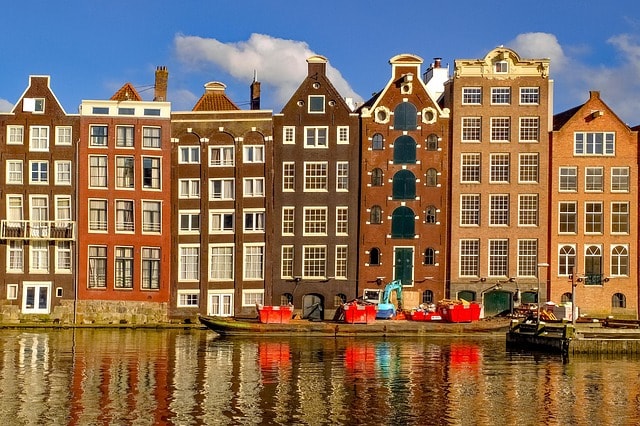
The canals of Amsterdam were a masterstroke of urban planning during the Dutch Golden Age in the 17th century. As Amsterdam exploded into one of the world’s richest trading hubs, the city needed a way to manage water, transport goods, and expand rapidly without chaos. The solution was the iconic concentric canal system, known as the Amsterdam Canal Ring, designed in the early 1600s as both a defense mechanism and a logistical network.
Merchants built narrow, tall houses along the canals (taxed based on width, because of course they were), using the waterways to move goods directly from ships into storage. Over time, these canals became the backbone of daily life, part highway, part drainage system, part social space. Today, they’re recognized as a UNESCO World Heritage Site, but what’s wild is that they’re still doing their original job. Quietly managing water levels in a city that quite literally lives below sea level.

Upgrade the experience:
Skip the giant crowded boats. Look for smaller, family-friendly cruises or even electric boats you can captain yourself.
Kid tip:
- Spot “leaning houses” and guess which one will fall first
Do this at sunset. The bridges light up, and suddenly the whole city feels like a movie set.
Also, Choose an electric or low-impact boat tour. Amsterdam is leading the way in cleaner canals, and supporting those operators matters.
3. Go Full Science Nerd at NEMO
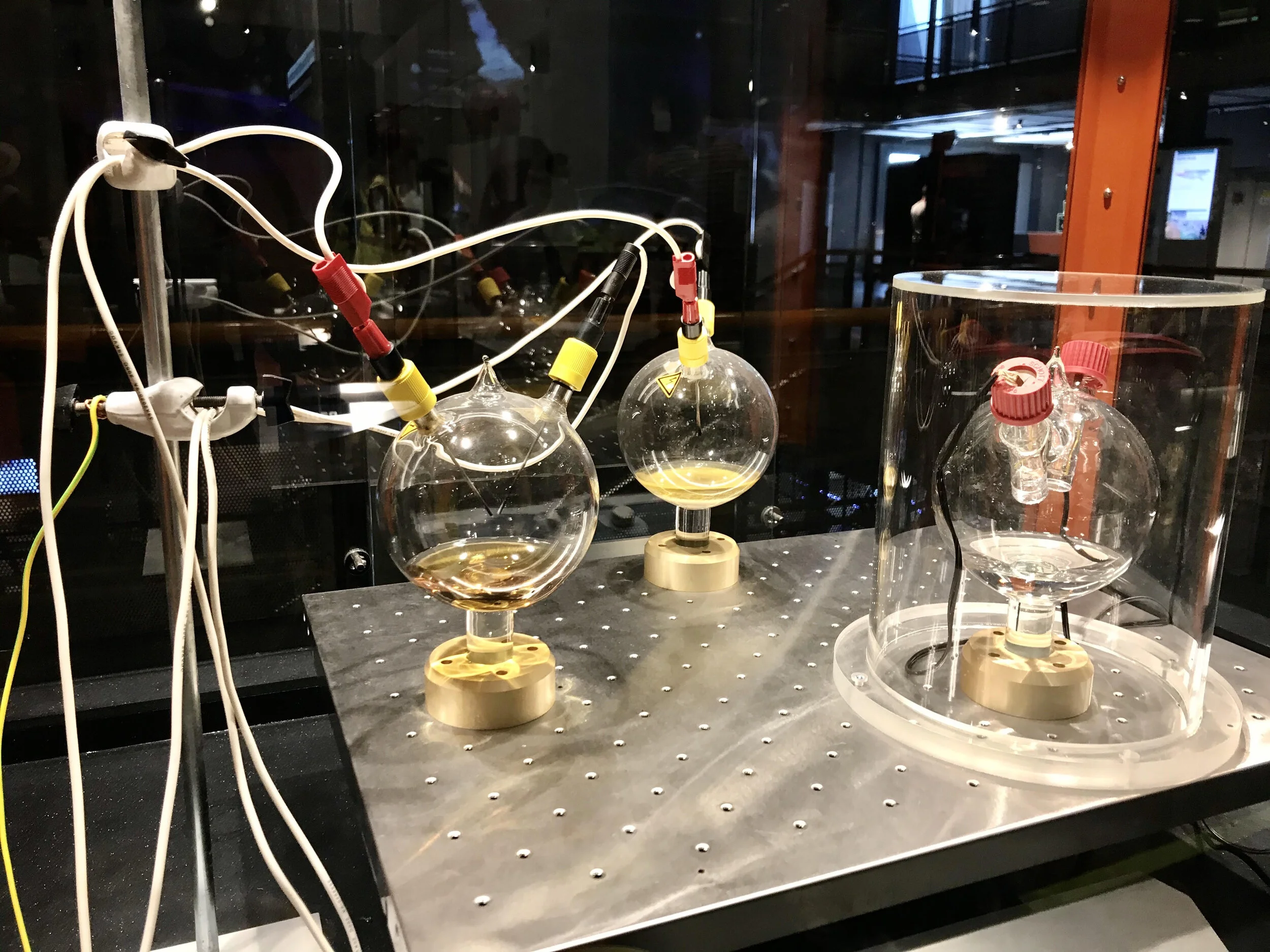
NEMO Science Museum is what happens when someone builds a museum and says, “What if kids could touch literally everything?”
It’s shaped like a giant green ship and packed with hands-on exhibits: bubbles, physics experiments, water play, chain reactions. It’s chaos in the best way!

Don’t miss: The rooftop terrace. Free entry, epic views, and often water features for kids to splash in.
Pro tip: Plan at least 2–3 hours. You won’t get them out easily.
4. Eat Pancakes the Size of Your Head

Dutch pancakes are not your average breakfast situation. They’re thinner than American pancakes but bigger than a pizza. Plus, you can go sweet or savory. In upscale restaurants across the United States you can sometimes find these called “Dutch Baby” pancakes.
Hit up a classic spot like Pannenkoekenhuis Upstairs for a cozy, slightly chaotic vibe.
What to order:
- Apple + cinnamon + syrup (safe bet)
- Bacon + cheese (trust)
This is one of those “kitchen table culture” moments, simple food, shared experience, very Dutch.
5. Step Into a Storybook at the Anne Frank House
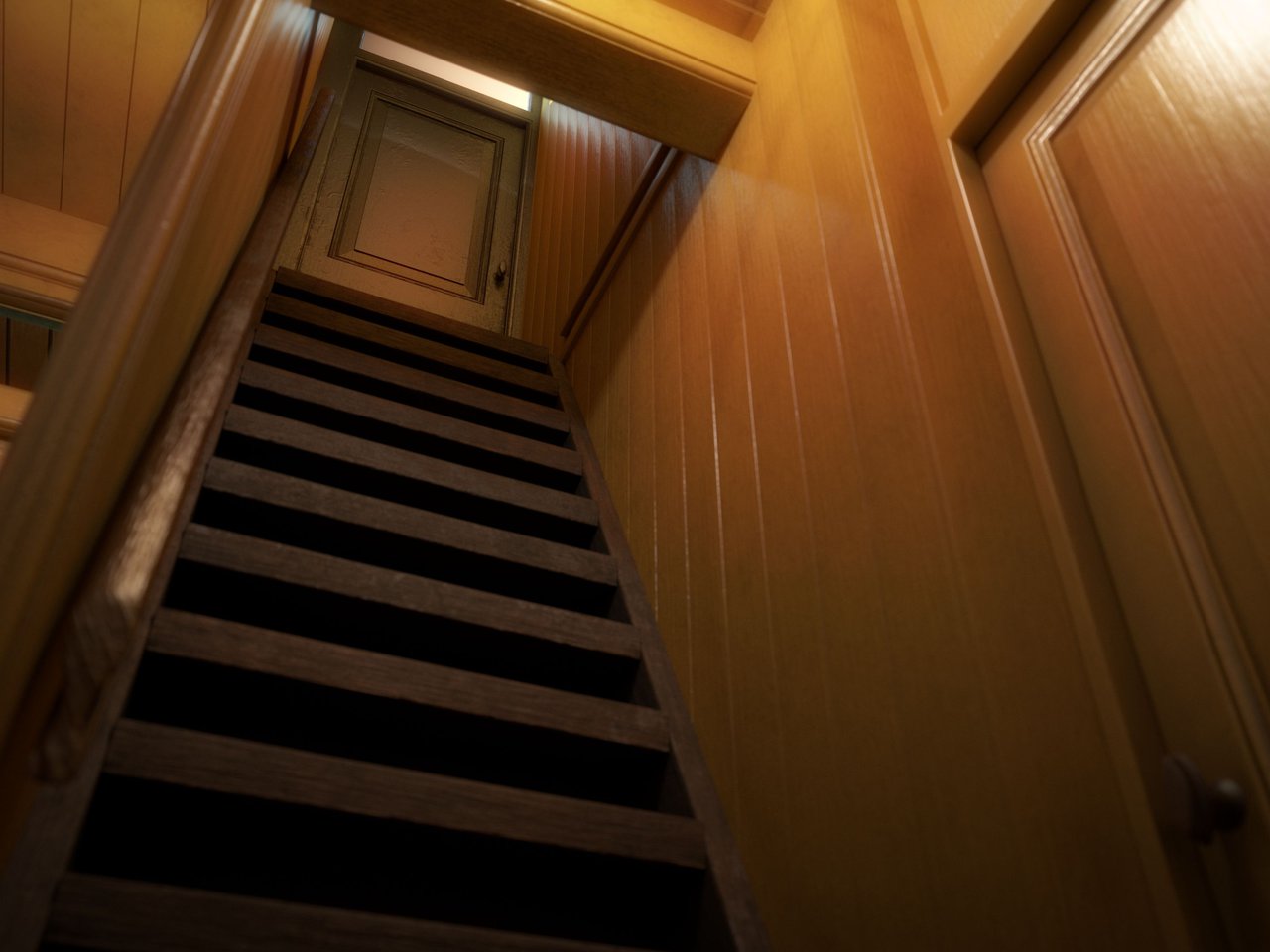
Anne Frank House is one of the most powerful places in the city.
This is better suited for kids 10+, but it’s an experience that sticks. Walking through the hidden annex makes history feel immediate and real.
The Anne Frank House is the hidden annex where Anne Frank and her family lived in secret during the Nazi occupation of the Netherlands in World War II. From 1942 to 1944, Anne, her parents, sister, and four others hid behind a concealed bookshelf in this canal-side building, relying on the help of courageous locals to survive.
During this time, Anne wrote her now world-famous diary, offering an intimate, human perspective on fear, hope, and resilience under unimaginable circumstances.
After the family was discovered and deported, only her father survived the war, later publishing her diary and helping turn the house into a museum. Today, walking through the empty rooms of the annex is intentionally stark, no furniture, just space, forcing visitors to confront the reality of what happened there.
Why it matters:
It opens up conversations about empathy, courage, and the human side of history. Not just dates and facts.
Pro tip: Book tickets weeks in advance. They sell out fast.
6. Explore the Jordaan Like You “Live” There

The Jordaan is where Amsterdam slows down.
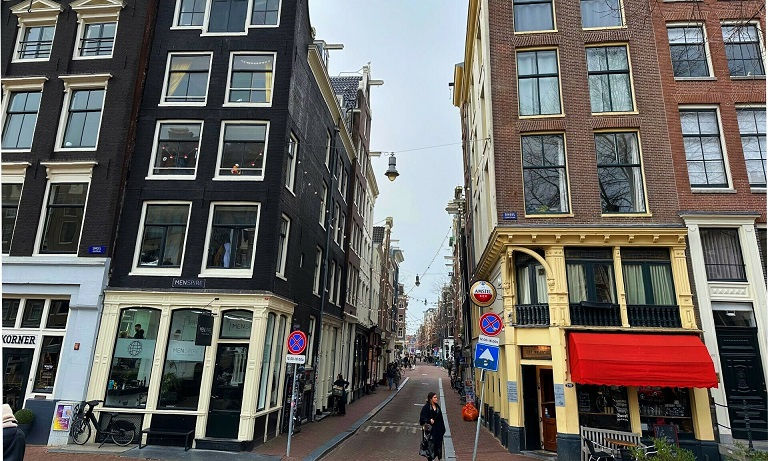
Small streets, independent shops, bakeries, little canals, it’s the kind of place where you wander without a plan.
The Jordaan began in the early 17th century as a working-class district built during Amsterdam’s rapid expansion in the Dutch Golden Age, originally intended to house laborers, immigrants, and artisans who supported the city’s booming trade economy.
Unlike the grand canal houses of wealthy merchants nearby, the Jordaan was known for its narrow streets, modest homes, and tightly packed courtyards, where life spilled out into the alleys, markets, music, and community all blending together. Over the centuries, it became a hub of Amsterdam’s cultural identity, shaped by waves of immigrants, including French Huguenots (which is likely where the name “Jordaan” comes from, possibly derived from the River Jordan).
By the 20th century, the neighborhood had fallen into decline, but artists, students, and creatives began moving in, drawn by its character and affordability. Today, the Jordaan is one of the city’s most desirable areas, full of galleries, cafés, and boutique shops, but it still carries that original spirit of resilience and community, making it feel less like a polished attraction and more like a lived-in piece of Amsterdam’s soul.
What to do with kids:
- Stop for fries (always fries)
- Pop into tiny toy stores
- Let them pick a random snack from a bakery
Why kids love it:
It feels like exploring, not sightseeing.
7. Visit the Art Playground at the Van Gogh Museum
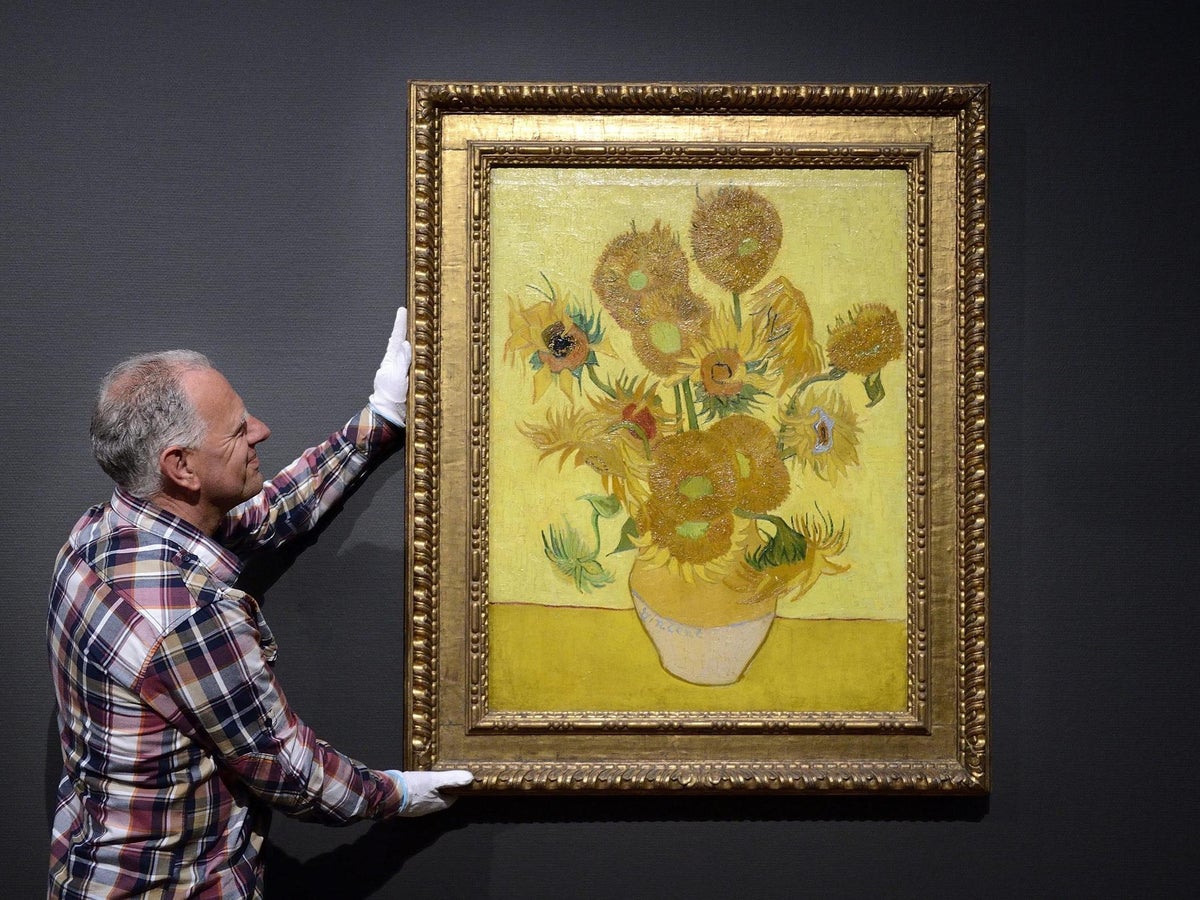
Van Gogh Museum might sound like a stretch for kids. But hear me out…
They’ve done a solid job making it accessible, with family guides and interactive elements.
Make it work:
- Focus on a few paintings (ie. Sunflowers)
- Turn it into a scavenger hunt.
Pro tip: Go early or late to avoid peak crowds.
8. Take a Day Trip to Zaanse Schans (Windmills!)

About 20 minutes from the city, Zaanse Schans feels like stepping into a Dutch painting.
Windmills spinning, wooden houses, cheese-making demos. It’s peak Netherlands!
The story of Zaanse Schans is really the story of how the Dutch turned wind into power. In the 17th and 18th centuries, the nearby Zaan region became one of the world’s first industrial zones, packed with over 600 windmills that powered everything from sawmills and oil presses to paint production and grain processing. These weren’t just scenic icons, they were the engines of the Dutch Golden Age, helping the Netherlands dominate global trade by making shipbuilding faster and more efficient (wind-powered sawmills could process timber at revolutionary speeds).
Windmills also played a critical role in water management, pumping water out of low-lying land to create polders: livable, farmable ground reclaimed from the sea. Zaanse Schans today is an open-air preservation of that era, where historic windmills and traditional houses were relocated to protect this heritage.
Why kids love it:
- Windmills feel like giant machines from another world
- Clog-making demos are weirdly fascinating
Pro tip: Go early morning to beat the crowds. Especially during the summer.
Cerca 🌾: This is a great example of preserving cultural heritage, traditional crafts, local production, and slower tourism.