

In Spain children stay out late. Families eat in restaurants together. Plaças function as communal living rooms. Teenagers roam around in packs, little ones kick footballs and play on jungle gyms, grandparents hold court, and everyone seems to stop for an ice cream or a vermouth between lunch and dinner.
For visiting families, the trick isn’t finding a city with enough to do. Finding the right neighborhood to stay in however can take the trip from good to marvelous.
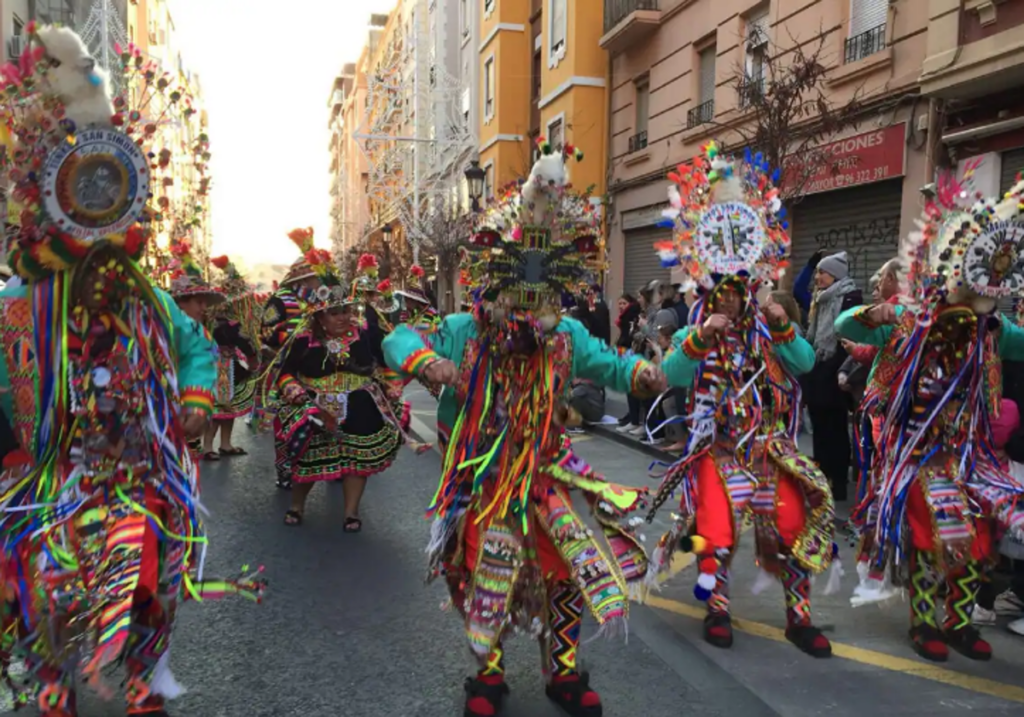
Stay directly on Barcelona’s La Rambla, beside Madrid’s Puerta del Sol or in Seville’s Santa Cruz and you’ll certainly be close to the sights, but you may also spend your trip weaving around tour groups, eating at restaurants designed largely for visitors and hearing more English than Spanish.
A better strategy is to stay one neighborhood beyond the tourist epicenter: close enough that you can walk or take a quick Metro ride to the monuments, but far enough away that your morning starts with parents taking their children to school rather than a queue for a hop-on-hop-off bus.
These six neighborhoods hit that sweet spot. They are walkable, generally comfortable for families, packed with good food and everyday amenities, and interesting enough that returning “home” at the end of the day feels like part of the vacation rather than simply where you sleep.
And there is another reason to choose neighborhoods like these. Several Spanish cities, Barcelona in particular, have been grappling with overtourism and the pressure visitor accommodation puts on residential communities. The Catalan’s can be prickly, and the whole city is sensitive to the double-edged sword of tourism dollars vs tourism disruption. Staying in licensed accommodation, buying from independent shops, eating at neighborhood restaurants and treating residential plazas like somebody’s actual neighborhood are meaningful ways to travel more responsibly.
Here are six of the best bases in Spain for families who want to experience la vida de barrio. Neighborhood life.
1. Gràcia, Barcelona
Best for: families who want plazas, independent shops and Barcelona without the Rambla madness
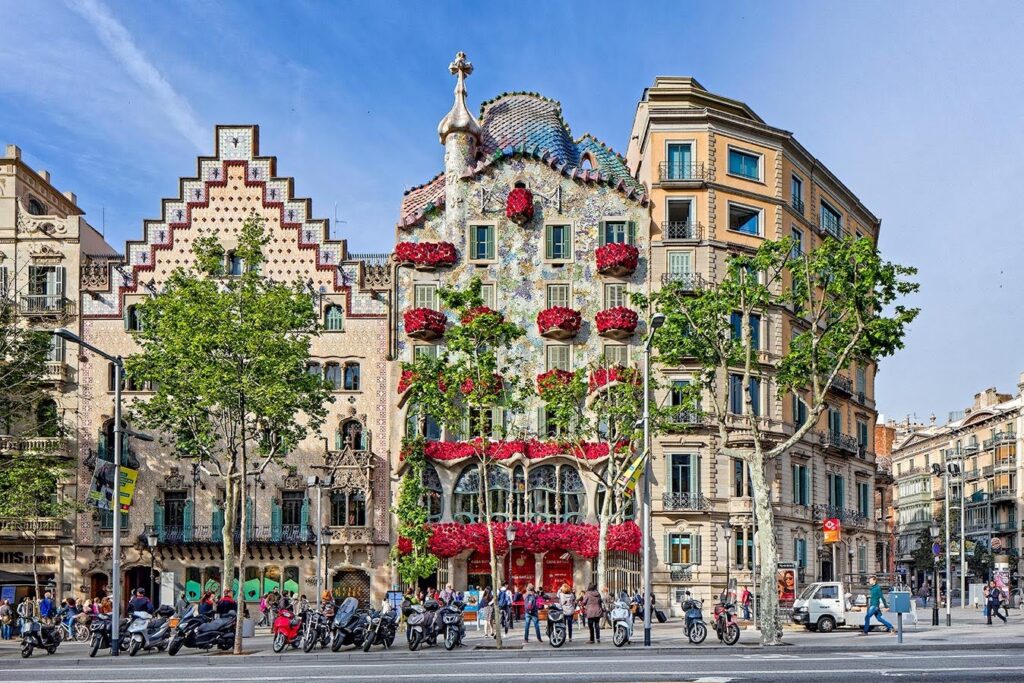
If Barcelona were a collection of villages rather than a city, Gràcia would still feel like its own town, partly because it actually was one until it was absorbed into Barcelona in the late 19th century.
Instead of monumental boulevards, much of Vila de Gràcia is made up of compact streets opening suddenly onto plazas filled with cafés, benches, children and dogs. Plaça de la Vila de Gràcia, Plaça del Sol, Plaça de la Virreina, Plaça del Diamant and smaller squares form a kind of neighborhood living-room network.
That arrangement is gold when you’re traveling with kids.
Parents can order a coffee or vermut while younger children burn off steam nearby. Older kids and teenagers can walk a few blocks independently for pastries, gelato or shopping without navigating eight lanes of traffic. Dinner rarely requires an expedition: there are bakeries, casual restaurants and grocery stores around seemingly every corner.
More importantly, Gràcia still possesses an identity distinct from central Barcelona. Even Barcelona-focused travel guides describe it as calmer, residential and particularly suited to visitors looking for local life rather than the tourist center.
What can you walk to?
The biggest bonus is Park Güell, sitting above the neighborhood. Depending on where you stay, you can walk there in roughly 15–30 minutes, although the final stretch is uphill, so be prepared.
Walk south and you reach Passeig de Gràcia and Gaudí territory. Casa Vicens, one of Gaudí’s earliest major buildings, is actually in Gràcia itself.
For the Gothic Quarter, beaches and waterfront, use Barcelona’s excellent Metro rather than trying to make every excursion a heroic family walk.
That balance is exactly why Gràcia works: you can do the Barcelona blockbuster sights during the day and retreat afterward into someplace that feels considerably more human-scale.
What families should do here
The most underrated activity is essentially nothing.
Get pastries in the morning. Wander to a plaza. Let your kids discover the playground. Have lunch. Browse independent stores. Stop for another snack.
That isn’t wasted sightseeing time; that is Barcelona.
One day, walk uphill toward Park Güell early, before the busiest part of the day. Another afternoon, head down toward Passeig de Sant Joan, which is unusually pleasant for families thanks to its wide pedestrian spaces.
With teens, dedicate a couple of hours to Gràcia’s independent fashion, record, book and vintage stores rather than dragging everyone through another museum.
What to eat
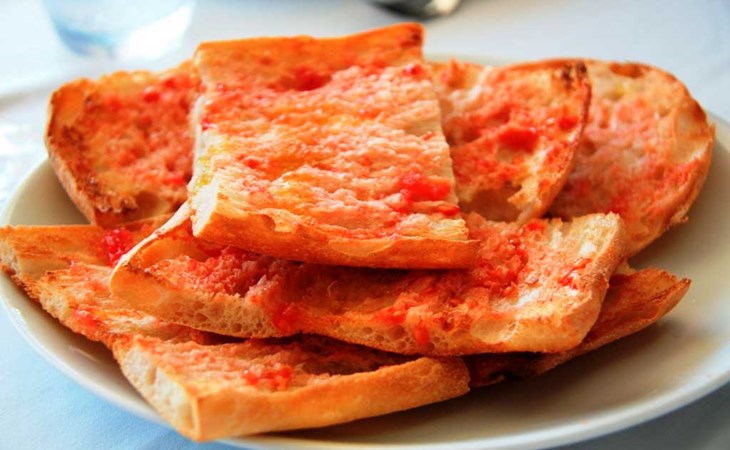
Try pa amb tomàquet, bread rubbed with tomato, garlic and olive oil, the quintessential tapas dish.
Other Catalan options worth seeking out include:
Croquetes, especially ham or chicken (ask if they are fresh or from frozen)
Botifarra, Catalan sausage
Patates braves – Spanish french fries served with a
Crema catalana
Coca, a Catalan flatbread/pastry that comes in sweet and savory versions
And Boquerones – mild Spanish anchovies in vinegar – my personal favorite.
And if the children have reached the stage where every vacation requires a daily gelato, Gràcia can absolutely accommodate them.
For more about the food of Barcelona check out our Barcelona: Eat Here podcast episode!
The responsible-travel note
Barcelona is the place on this list where your accommodation choice matters most.
Tourism pressure has become a significant local issue, including in Gràcia, where residents have publicly raised concerns about crowding and the transformation of neighborhood life.
Choose a properly licensed hotel, aparthotel or legal vacation rental – ask to be sure.
Then spend locally. Buy breakfast at the bakery. Shop in the market. Eat at the tiny neighborhood restaurant, don’t go to Starbucks. (I love Starbucks, but you’re in Barcelona.)
Gràcia remains appealing precisely because people actually live here. The sustainable way to visit is to participate in that ecosystem rather than replace it.
One thing families should know
August’s Festa Major de Gràcia transforms streets with elaborate resident-made decorations and celebrations, but it also attracts enormous crowds.
Fantastic for older kids and teens who love street festivals. Barcelona does festivals better than anyone else and this is one of the biggest.
In Brief: One of Europe’s best urban neighborhoods for families who want to feel temporarily plugged into local city life.
2. Chamberí, Madrid
Best for: families who want elegant Madrid without staying in Madrid’s tourist core
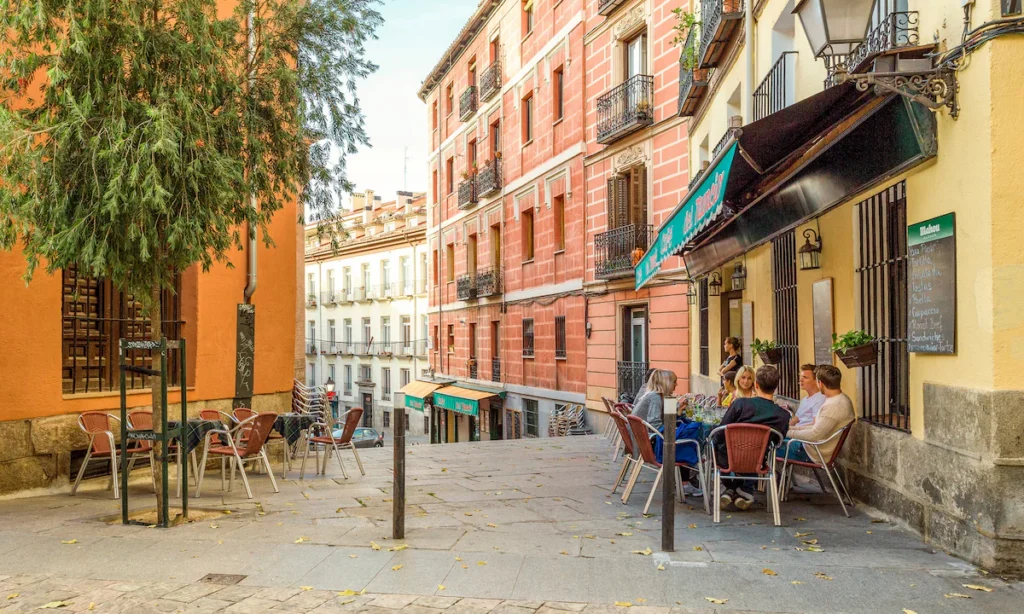
Central Madrid is enormously walkable, but there is a big difference between being able to walk somewhere and wanting your children to spend every morning fighting through crowds in Sol.
Immediately north of Madrid’s historic center, Chamberí is a large district incorporating neighborhoods including Trafalgar, Almagro, Ríos Rosas, Gaztambide and Vallehermoso. Madrid’s official tourism authority describes it as one of the capital’s most authentic and traditional districts and highlights its squares, historic architecture and deeply rooted neighborhood identity.
For families, the sweet spot is around Trafalgar and Plaza de Olavide, extending north toward Ríos Rosas.
This is handsome Madrid: apartment buildings with balconies, neighborhood bakeries, traditional taverns, fashionable restaurants and streets that feel busy without feeling overwhelmed.
Why families love it
Chamberí provides something central Madrid sometimes struggles to deliver: space.
Plaza de Olavide is exactly the sort of Spanish square parents fantasize about before traveling—a pedestrianized gathering place ringed with terraces where neighborhood life unfolds around you.
Then there is Parque de Santander, useful when younger children desperately need grass, running space or a break from architecture.
You can still reach the center rapidly by Metro, but your immediate surroundings feel residential.
Official Madrid tourism describes Chamberí as deeply traditional despite its sophisticated architecture, while more recent coverage highlights the persistence of old neighborhood businesses alongside newer cafés, food shops and galleries.
What can you walk to?
From southern Chamberí, neighborhoods such as Malasaña and Chueca are easily accessible on foot. These are wonderful places to explore in the evening when nightlife is boisterous and friendly.
Walk farther and you can reach Gran Vía and central Madrid.
For the Prado, Retiro Park or the Royal Palace, however, hop on the Metro. Madrid’s transit system makes it unnecessary to select a hotel directly beside every landmark.
A brilliant rainy-day option
Chamberí has one of Madrid’s coolest under-the-radar attractions: Andén 0, associated with the city’s historic Metro infrastructure.
There is also the Museo Geominero, whose old-fashioned galleries of minerals, fossils and geological specimens can be surprisingly fun for school-age children who are museumed-out on Velázquez.
For an experience that feels gloriously Madrid rather than international-tourist-Madrid, visit Frontón Beti Jai, the restored historic Basque pelota court.
These are the sorts of attractions that turn a neighborhood stay into something more interesting than just a housing decision.
What to eat
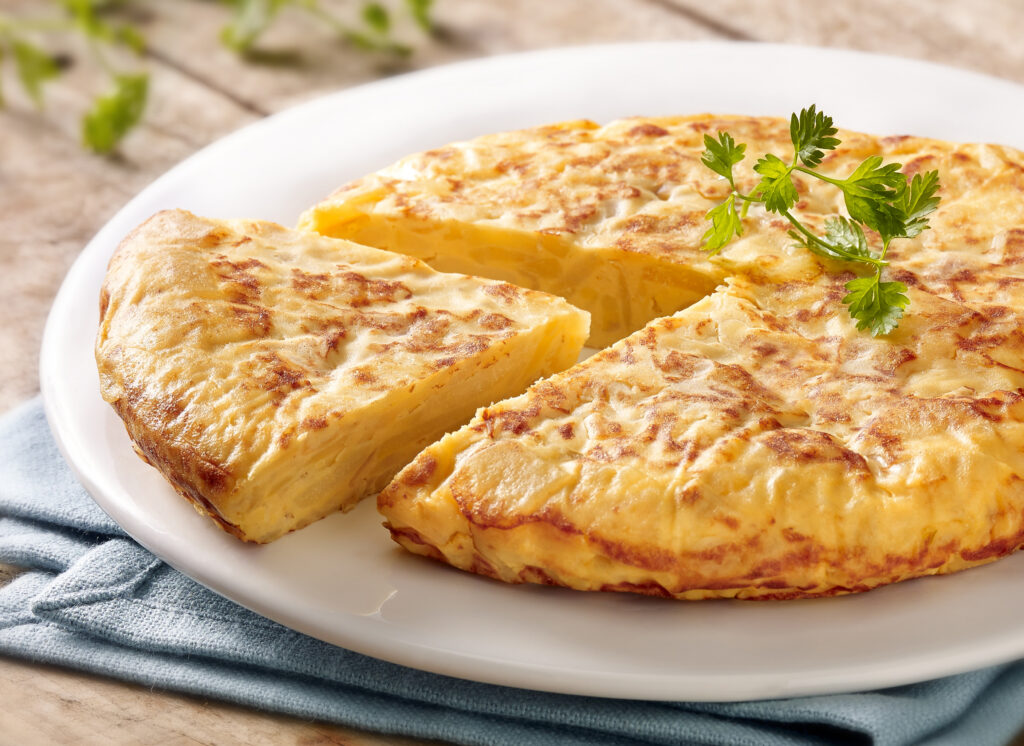
Madrid is a snack city.
Try:
Tortilla española
Croquetas de jamón
Bocadillo de calamares
Churros con chocolate
Callos a la madrileña, if your family contains adventurous eaters
And introduce children to the brilliant institution of the Spanish merienda, the late-afternoon snack that conveniently plugs the enormous gap between lunch and Spain’s very late dinner.
Plaza de Olavide is an excellent place to settle in with drinks and tapas while your family collectively stops worrying about what time dinner is supposed to happen.
For food-loving families
Make a trip to Mercado de Vallehermoso.
Chamberí’s food scene combines traditional Madrid institutions with newer international and contemporary restaurants; recent coverage has also documented the district’s increasingly diverse independent culinary scene.
Instead of treating the market as a sightseeing attraction, use it like a resident would: buy fruit, cheese, bread and snacks for the apartment.
That’s cheaper, culturally more interesting and keeps spending within neighborhood businesses.
In Brief: If you have elementary-age kids or teenagers and want Madrid to feel sophisticated but manageable, Chamberí may be the strongest all-around family neighborhood on this list.
3. Russafa, Valencia
Best for: creative families, café people and teenagers who think your vacation needs better clothes
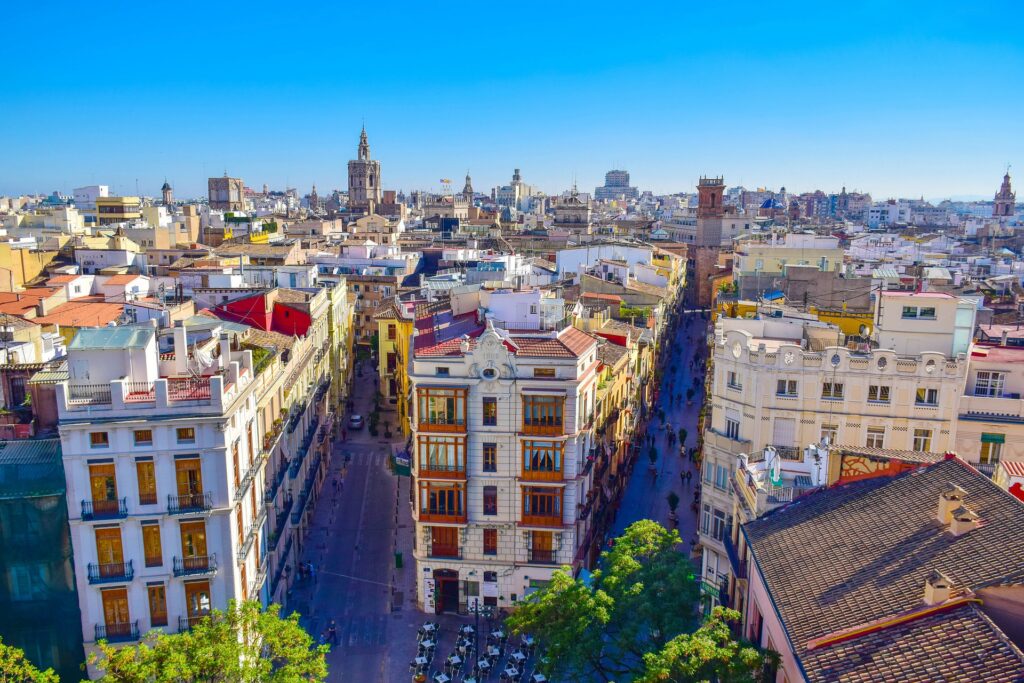
Barcelona gets the fame and Madrid gets the grandeur, but Valencia may be Spain’s easiest big city for families.
And Russafa, usually written Ruzafa in Spanish and Russafa in Valencian, is where you should consider staying if you want the coolest version of it.
Valencia’s tourism authority calls Russafa one of the city’s trendiest neighborhoods. It sits just south of the historic center and was once an independent settlement before becoming part of Valencia in the 19th century. Its central Mercado de Ruzafa remains one of the anchors of neighborhood life.
Today you’ll find coffee shops, bakeries, vintage stores, wine bars and creative businesses mixed among traditional neighborhood commerce.
This is not a museum neighborhood.
It’s a people-live-here neighborhood that happens to be extremely fun to visit.
Why it works brilliantly with kids
First: it is flat. Parents pushing strollers will understand just how important those four words are.
Second, Russafa sits close to the spectacular Jardín del Turia, the former riverbed transformed into a huge ribbon of parkland running through Valencia.
You can walk, run, rent bikes, picnic, find playgrounds or simply allow children to move at their own speed rather than constantly saying, “Stay right next to me.”
Go far enough through the gardens and you’ll eventually reach Valencia’s futuristic City of Arts and Sciences, including its science museum and aquarium complex.
What can you walk to?
Valencia’s historic center is roughly on your doorstep.
You can walk toward Mercado Central, the cathedral and the atmospheric streets of Ciutat Vella, spend several hours sightseeing and then head back toward Russafa when the central lanes start feeling crowded.
The neighborhood’s position just south of the historic center is one reason it works so well as a base.
Teenager rating: extremely high
Russafa is probably the winner on this list if you’re traveling with teens. Coffee shops that take coffee seriously. Vintage clothing. Independent boutiques. Murals, design stores, and people who look irritatingly cool while doing absolutely nothing.
Even recent international travel coverage has highlighted Russafa specifically for café hopping and vintage shopping.
What to eat
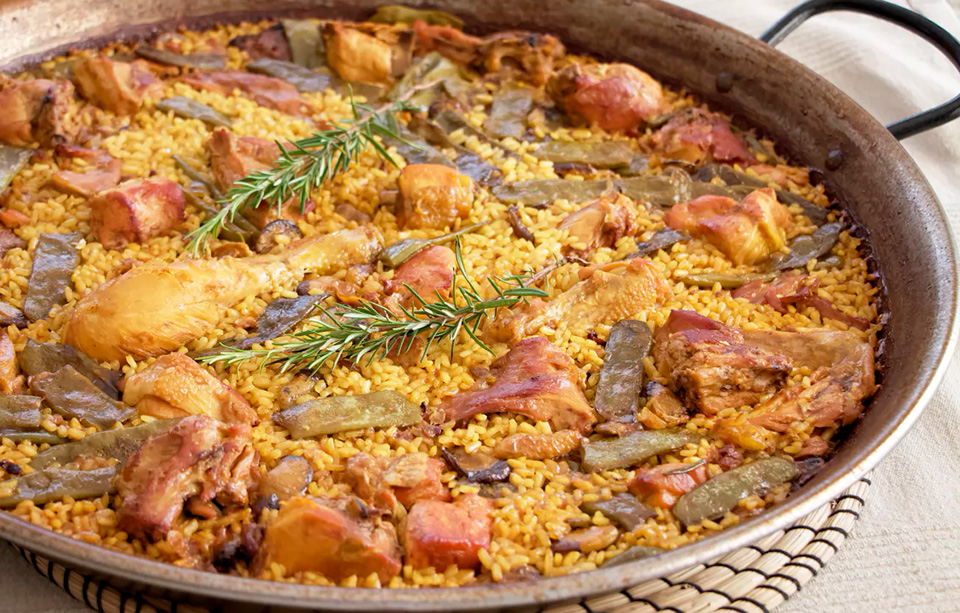
This is Valencia, so paella.
Real Valencian paella is traditionally a lunch dish, and classic paella valenciana is generally made with ingredients such as chicken and rabbit and sometimes duck or snails, rather than seafood as many Americans associate with paella. (You can obviously find seafood paella alongside
Even better: dedicate a day to going toward the beach or nearby rice-growing areas for a long lunch rather than simply ordering paella from the first restaurant beside a monument.
Also try:
Horchata with fartons
Esgarraet, roasted pepper and salted cod
Clóchinas, Valencia’s small seasonal mussels
Buñuelos, particularly around festival time
The sustainable angle
Valencia is a superb city for bikes and walking, and the Turia makes non-car transportation genuinely enjoyable rather than virtuous-but-annoying.
Spend at the Mercado de Ruzafa, rent bikes from a local company and patronize neighborhood businesses.
Markets matter culturally because they are not simply picturesque buildings. They’re part of Spain’s everyday food infrastructure.
Cerca verdict
In Brief: Possibly Spain’s best neighborhood for families with teenagers, particularly families who prioritize food, design and street life over formal sightseeing.
4. Triana, Seville
Best for: families who want flamenco, ceramics and unmistakably Andalusian neighborhood life
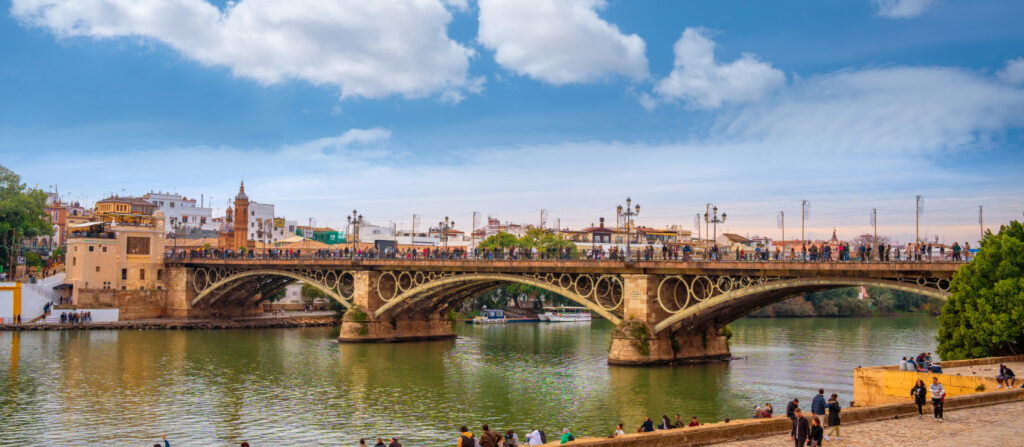
There are few places in Spain where geography gives you such a perfect tourist/local dividing line.
Seville’s cathedral, Alcázar and Santa Cruz sit on one side of the Guadalquivir. Triana sits across the river.
Walk across the bridge and you’re still astonishingly close to Seville’s major monuments, but the atmosphere changes.
Triana is historically associated with ceramics and flamenco, cultural traditions the neighborhood continues to celebrate through workshops, performance spaces and institutions such as the Centro Cerámica Triana. Seville’s tourism authority explicitly highlights both traditions as central to the neighborhood’s identity.
For families trying to understand southern Spain rather than merely photograph it, that’s pretty compelling.
Why children tend to like Triana
It is busy and social. Head toward Calle San Jacinto in the early evening and you get the Spanish family promenade in full force: parents, kids, dogs, strollers, teenagers and older residents all moving through the same public spaces.
Then there is the river. Waterfront walks provide a useful reset after sightseeing, especially because a day inside the Alcázar and cathedral can be magnificent but exhausting for small children.
Crossing the bridge itself becomes part of the daily routine: home on one bank, the monumental city on the other.
What can you walk to?
A lot. Walk across the Puente de Isabel II and you are heading toward central Seville. The Cathedral and Alcázar are achievable walks for many families.
Yet at night, instead of remaining inside the busiest part of the historic quarter, you retreat across the river.
Official city tourism describes Triana as offering river views toward landmarks including the Cathedral and Torre del Oro while retaining its lively bars, terraces, ceramic tradition and flamenco culture.
The family experience not to miss: ceramics
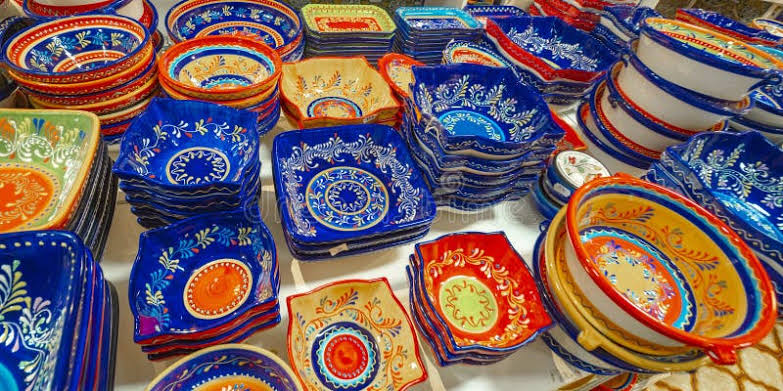
Let everyone choose a small piece of locally produced ceramic as their souvenir. Better still, seek out an actual ceramics workshop or artisan producer.
For kids, ceramics also provides something tangible: they can see how tiles are painted and start noticing the same motifs on buildings around Seville.
That’s regenerative travel in a very practical sense, your tourism spending helps keep a local craft economically relevant.
Flamenco with kids
Absolutely do flamenco.
Don’t assume the enormous heavily advertised show is automatically best, even though it will likely be wonderful. Have a look for a smaller performance or culturally grounded venue and explain a little about flamenco beforehand, especially to older children.
Have them watch the communication between singer, guitarist and dancer rather than expecting a choreographed stage musical.
Triana’s continued association with flamenco is part of what differentiates staying here from simply consuming a performance in the tourist center.
What to eat
Dig in to tapas.
Espinacas con garbanzos — spinach with chickpeas
Salmorejo, cold tomato and bread soup
Croquetas
Solomillo al whisky
Fried fish
Tortillitas de camarones, when available
Go into Mercado de Triana and allow everyone to choose something.
Children don’t have to adore every food. Traveling is also about learning that other people’s normal lunch can look completely unfamiliar.
Important summer warning
Seville heat is serious business. The Spanish believe in air-conditioning but if you’re visiting in midsummer, restructure your day rather than trying to conquer the city at 3 p.m.
Sightsee early. Eat a long lunch. Retreat indoors during peak heat.
Reemerge in the evening when the streets come back to life. In Andalucía, staying out late with kids is part of the rhythm of everyday life.
In Brief: For families who want the greatest cultural contrast between “where we sleep” and “where the monuments are,” Triana is hard to top.
5. Pedregalejo, Málaga
Best for: families who want a beach vacation and city break at the same time
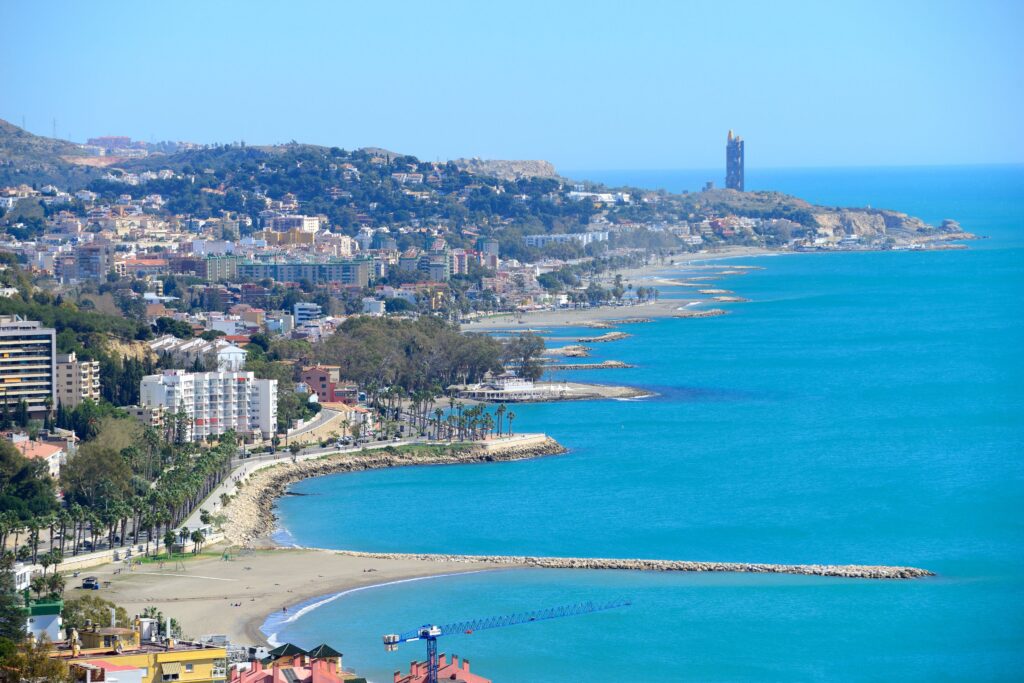
Here is the slightly left-field choice.
Most first-time visitors considering Málaga naturally look around Centro Histórico. But if you’re traveling with children, particularly in warm weather, look east along the coast toward Pedregalejo.
Historically one of Málaga’s seaside fishing neighborhoods, Pedregalejo retains a very different atmosphere from central Málaga. Málaga’s tourism authority groups Pedregalejo and neighboring El Palo among the city’s traditional seaside neighborhoods and specifically highlights their fish restaurants and famous skewered sardines.
This is where Málaga starts feeling less like a conventional European city break and more like living beside the Mediterranean for a week.
Why families love it
You wake up. Walk to the sea. Swim. You eat something. Repeat.
Pedregalejo’s urban beaches are divided into smaller coves by breakwaters, creating a distinctive family-beach atmosphere; Andalucía’s official tourism site describes Playa de Pedregalejo as a series of well-maintained town beaches with a familiar, family-oriented character.
Behind them runs a promenade lined with restaurants and cafés.
This produces one of the greatest family-travel conveniences imaginable:
You don’t load a car. You don’t pack for an expedition. Someone wants to swim? Go swim. Someone is hungry? Get lunch. Toddler melting down? Walk home. Teenager bored? Send them for ice cream.
But can we still see Málaga?
Central Málaga is west along the coast and easily reached by public transportation, taxi or bike. So you can spend a morning visiting the Picasso Museum, Alcazaba and historic center, then return to Pedregalejo for swimming and dinner.
The experience you absolutely should have
Eat espetos de sardinas.
These are sardines skewered and cooked over fire, traditionally associated with Málaga’s beachside cooking culture. The city’s own tourism materials specifically point visitors toward Pedregalejo and El Palo for espetos and fried fish.
You’ll often see boats or boat-shaped grills filled with sand beside restaurants, with skewers angled toward open flame.
Order them.
Go farther east
Walk or cycle toward El Palo, the neighboring fishing district. Fishing remains part of El Palo’s identity even though the active fleet is smaller than historically.
Fishing neighborhoods across Mediterranean Europe can easily become generic beachfront real estate. Supporting longstanding restaurants, markets and local businesses helps ensure visitors are contributing to the culture that makes the neighborhood appealing in the first place.
What to eat
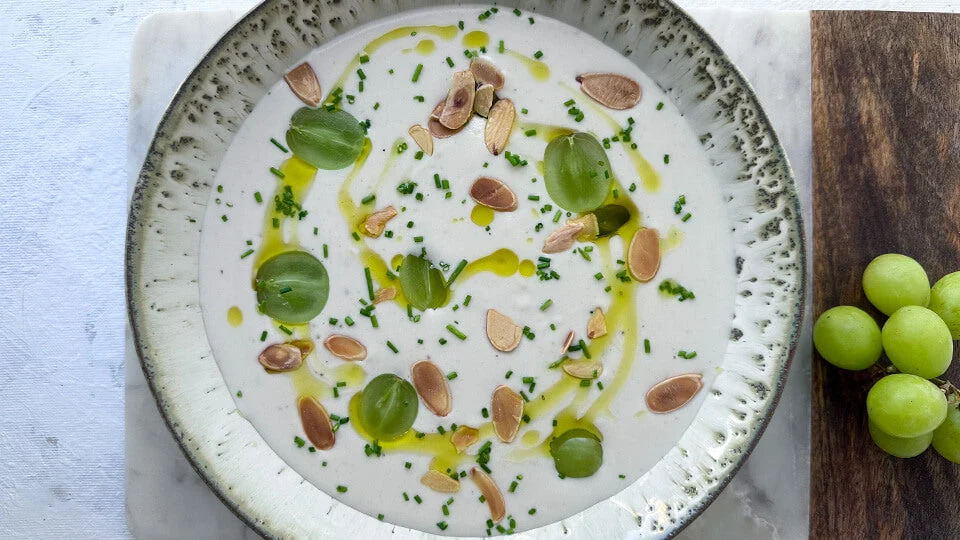
Beyond espetos:
Boquerones fritos — fried anchovies
Calamares
Gambas
Ensalada malagueña, often involving potatoes, orange and salted cod
Gazpacho
Ajoblanco, Málaga’s cold almond-and-garlic soup
And yes, plenty of ice cream.
Who should NOT choose Pedregalejo? Families visiting Málaga primarily for museums, nightlife and historic architecture may prefer staying closer to the center.
In Brief: The best neighborhood on this list for families who cannot decide between European city trip and Mediterranean beach vacation.
6. Gros, San Sebastián
Best for: active families, surfers, serious eaters and adventurous teenagers
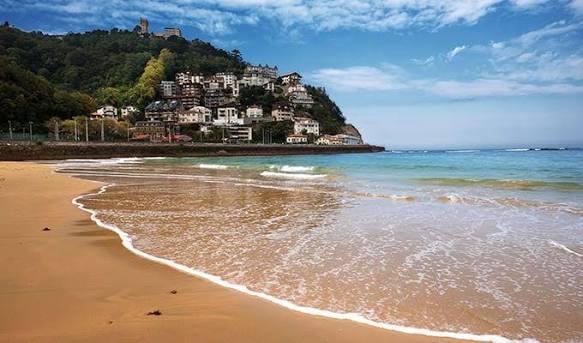
Finally, we head north to the Basque Country.
San Sebastián, Donostia in Basquem is already unusually easy to enjoy with children. It’s compact, extraordinarily walkable and surrounded by water and green hills. But many visitors cluster around Parte Vieja, the Old Town.
Families should look across the river at Gros.
San Sebastián’s official tourism authority describes Gros as one of the city’s liveliest neighborhoods, centered on surfing, culture and food around Zurriola Beach, with the Kursaal on one side and Mount Ulia rising beyond it.
This is where your teenager might legitimately announce that they want to move to Spain.
Why it works for families
Zurriola Beach is Gros’s superpower. Unlike La Concha, whose protected bay has a classic resort-town feel, Zurriola faces the open sea and is closely associated with surfing.
That immediately gives older kids something to do rather than simply another place to admire. Book a surf lesson. Watch local surfers. Walk the promenade. Then go eat.
Younger children aren’t forgotten
Families can head toward Plaza Cataluña, which includes space for children and provides a neighborhood gathering point away from the surf. And when everyone needs nature, head toward Monte Ulia.
Local and official tourism guides regularly highlight the hill and its trails as a natural extension of the Gros experience.
What can you walk to?
Essentially the whole central city.
Cross the river and you’re in or beside Parte Vieja. Keep walking and you reach La Concha.
This means families can experience San Sebastián’s famous pintxo bars without necessarily sleeping directly above them. Trust me: this distinction becomes considerably more important around midnight.
The genius of pintxos with kids
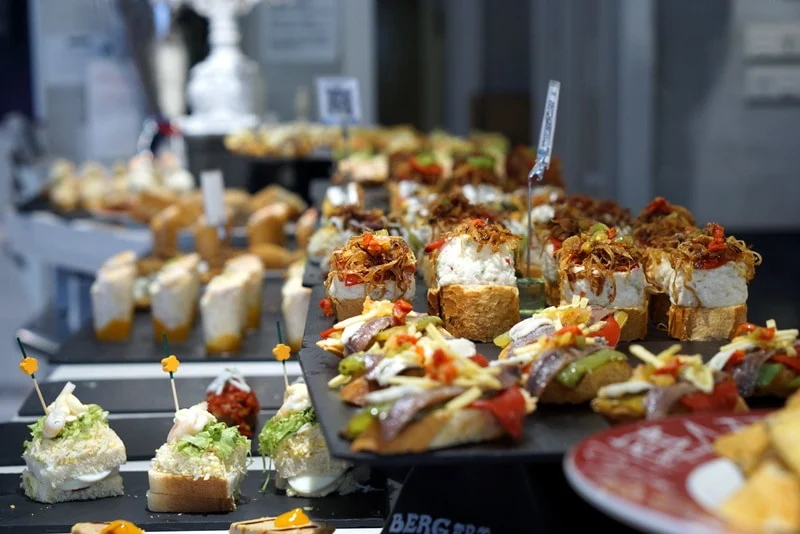
Pintxo culture may be the perfect culinary format for families with adventurous but unpredictable eaters. Instead of committing everyone to a two-hour restaurant meal, go from bar to bar. Then head out in search of the next one.
Endless fun and novelty and parents get to sample far more food than they would in a traditional dinner. Introduce kids to the idea that the objective isn’t necessarily to order the thing they recognize.
Pick something weird.
What to eat
Try:
Gilda: anchovy, olive and pickled pepper
Tortilla de patatas
Txistorra: fresh Basque sausage
Croquetas
Bacalao: salt cod
Txuleta: enormous grilled beef chop, ideally shared
Basque cheesecake
For those believe cheesecake means dense New York-style cake are about to have their worldview challenged.
Shopping with teens
Gros has also developed a strong independent retail identity, including local fashion, vintage and surf stores. San Sebastián tourism has specifically highlighted its independent designers, entrepreneurs and surf shops.
Allowing older kids a couple of hours to shop alone can be one of the great things you do on a family vacation. They will relish their independence and you’ll be the cool parent.
Responsible travel here
Surf culture is tied directly to the ocean, making Gros a natural place to talk about protecting the coastline you’re enjoying. Walk. Use public transportation. Book surf instruction with locally rooted operators. Buy from independent stores. Eat local and seasonal seafood.
And if you’re hiking Ulia, behave as though you’re visiting somebody’s backyard rather than a disposable attraction: stay on trails, carry rubbish out and keep noise reasonable.
Cerca verdict
In Brief: The coolest option on the list for active families and teenagers.
SO…
Buy fruit at the market.
Learn the baker’s name.
Let your children go back to the same playground twice.
Find “your” café.
Try a restaurant without a giant menu translated into six languages.
Use the Metro instead of insisting booking a place fifty feet from the biggest landmark (hello Sagrada Familia).
Buy ceramics from the person who makes them.
Eat the regional food people have been cooking there for generations.
Traveling this way isn’t just more sustainable or culturally responsible (although it generally is both). It’s also more fun.