


I just returned from a trip through Europe with my 13 year old daughter. She has newly discovered thrifting and vintage fashion and this was her favorite activity – well that, and hunting for the best pastries. We spent hours digging through the racks in Shoreditch in London, the Marais in Paris, and the Raval in Barcelona.
Europe is particularly brilliant for this kind of trip because vintage culture isn’t confined to expensive designer resale boutiques. In many cities, secondhand shopping is woven into everyday life. There are kilo shops where you pay by weight, charity shops where a €10 jacket might be the score of the trip, flea markets overflowing with old Levi’s and football gear, and beautifully curated boutiques selling vintage Prada, Adidas, Carhartt and local labels you aren’t likely to see back home.
For teenagers, these neighborhoods also offer something traditional sightseeing sometimes struggles to deliver: independence. Give them €30 or €50 and a couple of hours and suddenly they’re treasure hunting, doing currency conversions, negotiating personal style and engaging with a neighborhood instead of merely looking at it.
There is a sustainability bonus too – and kids are much more likely these days to see this as a must-have rather than a nice-to-have. Buying secondhand keeps clothing in circulation longer, reduces demand for newly manufactured fashion and directs more visitor spending toward independent neighborhood businesses. That’s a far better souvenir strategy than buying another mass-produced “PARIS” sweatshirt manufactured thousands of miles away. (Trust me, I have recycled more “PARIS” crewnecks than anyone should have ever bought.)
There is an important distinction between thrift, secondhand, vintage and designer resale, although stores use the terms rather loosely.
A charity or thrift shop generally offers donated clothing and the lowest prices. Secondhand shops sell previously owned items from any era. Vintage boutiques typically select older pieces for style or quality, and prices can be much higher. Designer resale shops may sell used luxury fashion at hundreds or thousands of euros.
Teenagers looking for bargains should prioritize words like secondhand, charity, kilo, friperie in France, genbrug in Denmark and Humana stores in several European countries.
And now, here are ten of the best neighborhoods in Europe for building an afternoon—or an entire trip—around vintage shopping, food and genuinely cool things to do.
1. Brick Lane & Shoreditch, London, England
Best for: Streetwear, Y2K, denim and teenagers who want maximum choice
For more on London fashion check out our threads episode of the Cerca Guide to London.
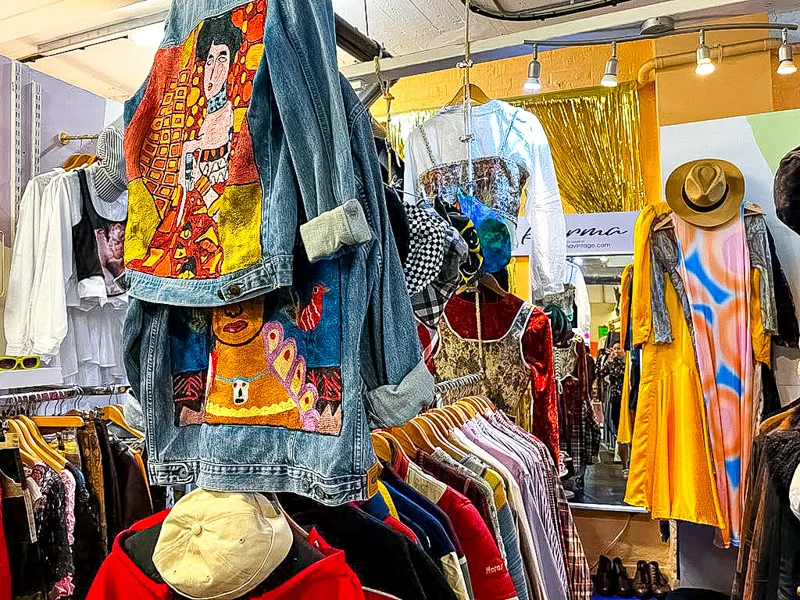
If you have a teenager who thinks “shopping” means Carhartt jackets, football jerseys, oversized graphic tees and anything that could plausibly have appeared in a 1998 music video, start here.
Brick Lane remains one of Europe’s easiest vintage neighborhoods to understand: walk down the street and keep going into shops. Unlike luxury resale districts, much of the shopping still feels like rummaging. You’ll find everything from old-school Adidas track jackets to Levi’s, dresses, workwear and band tees.
The Brick Lane Vintage Market is on the lower level of the historic Old Truman Brewery on Brick Lane. It features over 60 independent stalls and boutiques selling fashion, records, and accessories from the 1920s to the 1990s. It is open seven days a week. The Brewery is also just a couple of blocks from Spitalfields, a
One essential stop is ATIKA, just off Brick Lane on Hanbury Street. The sprawling store advertises more than 20,000 pieces, with particularly strong Y2K, denim, sportswear and 1990s stock. (ATIKA London Vintage)
Then head to Rokit. Rokit has been part of London’s vintage ecosystem for decades, and the Brick Lane store is especially approachable for teenagers. Its inventory stretches from true vintage into more wearable recent decades, and Rokit’s own recycled pieces repurpose discarded textiles rather than sending them to landfill. (visitlondon.com)
Beyond Retro is another reliable stop. It is less chaotic than some tiny thrift shops, making it useful if your teen wants vintage without spending an hour excavating a rack. The company operates several UK stores and has built its business around secondhand fashion. (Beyond Retro | Vintage Fashion Retailer)
What to eat
Brick Lane has deep connections to London’s Bangladeshi community, so this is absolutely the place for a curry, samosa or plate of biryani rather than defaulting to a chain restaurant. The neighborhood’s food culture is an important reminder that Shoreditch’s current fashionability sits on top of a much longer immigrant history.
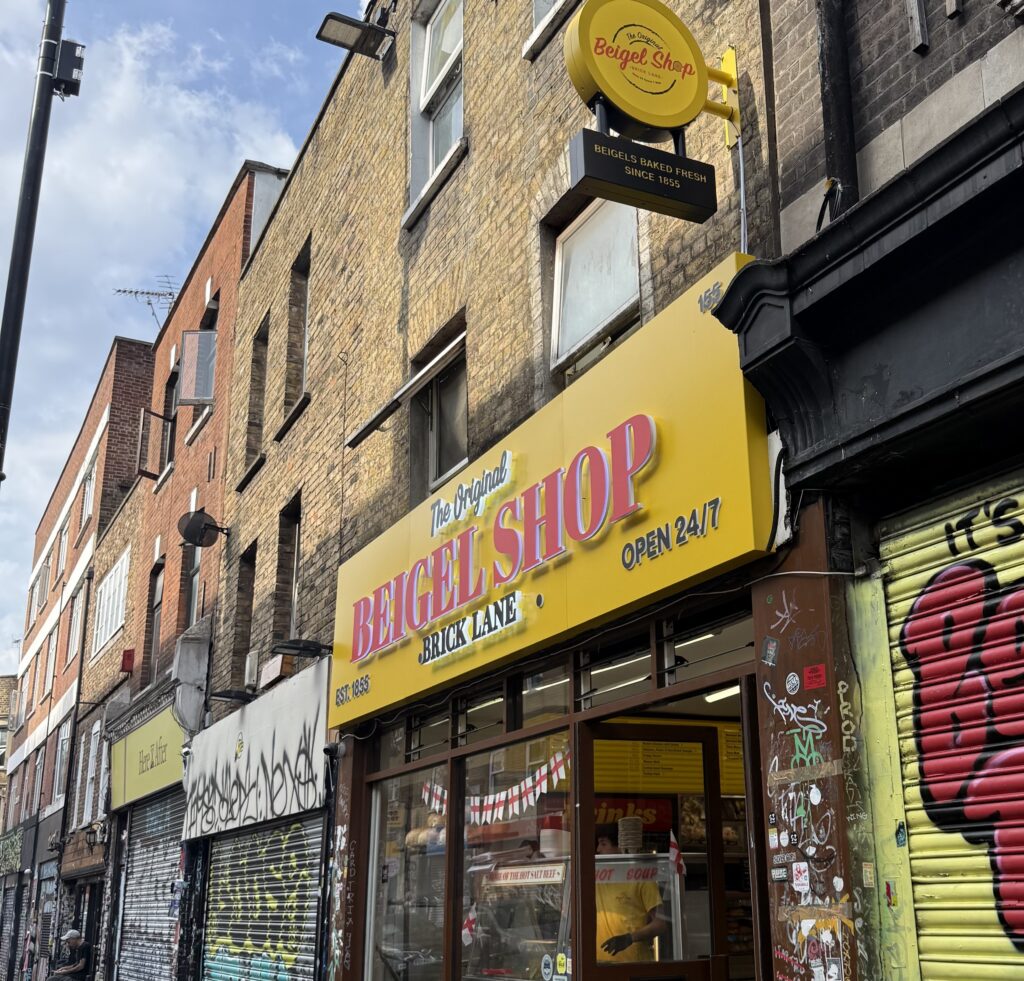
And get a bagel—or beigel, as it is traditionally spelled here. The classic move is a salt-beef beigel with mustard and pickles. (Think: New York corned beef on a bagel.)
Don’t miss
Walk through the surrounding streets looking at Shoreditch’s constantly changing street art, then wander through Old Spitalfields Market.
Teen strategy: Come Sunday if possible, when the broader Brick Lane market scene is especially animated. Vintage stalls join the permanent stores, giving teenagers the greatest possibility of finding something legitimately odd and wonderful rather than merely “curated.” (Vogue)
Responsible-travel angle: Buy from the smaller dealers and stalls rather than treating Brick Lane exclusively as a backdrop for Instagram. This neighborhood has experienced intense gentrification; spending with independent businesses helps keep some of its original commercial character alive.
2. North Laine, Brighton, England
Best for: The teenager who considers thrifting an actual sport
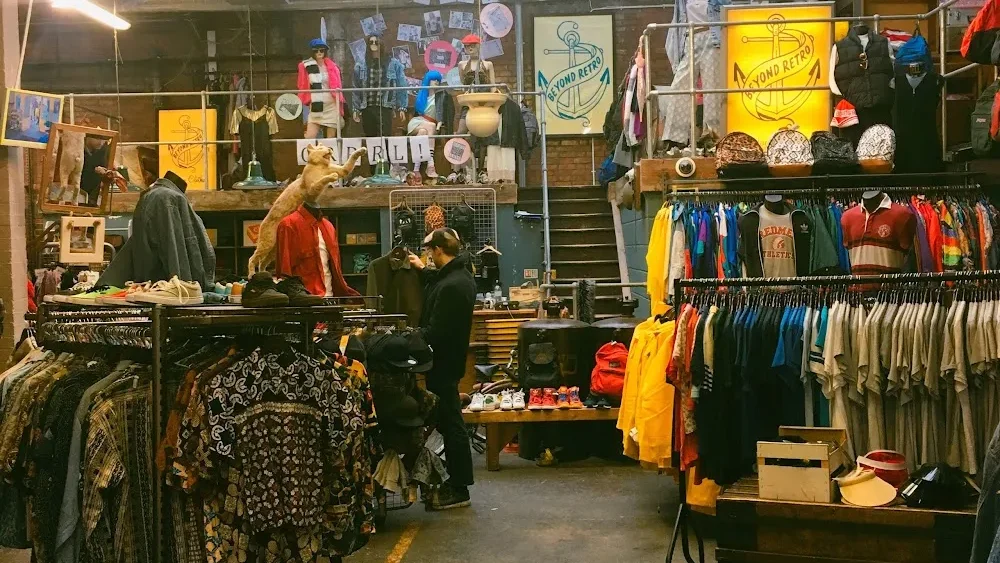
London gets the fame. Brighton may provide the more fun vintage-shopping day.
North Laine is a compact maze of colorful streets immediately north of Brighton’s historic center, stuffed with record stores, vegetarian cafés, tattoo parlors, independent boutiques and vintage clothing shops. It feels young without feeling manufactured for young people.
One of the strongest stops is To Be Worn Again on Sydney Street. The Brighton-based business has been dealing in secondhand and vintage clothing for more than 20 years and operates both retail and vintage-wholesale businesses. Expect denim, jackets, sweatshirts and lots of accessible everyday pieces rather than precious museum-quality fashion. (Instagram)
Also look for Beyond Retro Brighton. The sheer quantity makes it useful for teenagers who arrive with a particular mission—say, an oversized leather jacket or 1980s knitwear—rather than just wanting to browse. (Beyond Retro | Vintage Fashion Retailer)
But the real pleasure of North Laine is popping into the independent shops in between. Set a shopping budget and let teenagers work through the racks themselves.
What to eat
Brighton has one of Britain’s strongest vegetarian and vegan food scenes, so even committed meat eaters should try something plant-based here. It fits naturally with a day built around reuse rather than consumption.
Later, walk down to the seafront for traditional fish and chips. Eat them facing the Channel, and keep a fairly serious eye on the seagulls. Brighton gulls operate like organized crime.
Don’t miss
The Royal Pavilion is walking distance away and is so gloriously over-the-top that even museum-resistant teenagers can usually handle it. Then continue to the pebble beach and Brighton Palace Pier.
Brighton has a long tradition of independent, alternative and LGBTQ+ culture, and North Laine is part of that identity rather than simply a shopping district. (The Times)
Why it makes the list: Brighton is small enough that teens can plausibly explore North Laine independently while parents have coffee nearby. That makes it one of the best places in Europe for giving older teens a little urban freedom.
3. Le Marais, Paris, France
Best for: Paris fashion without Paris fashion prices
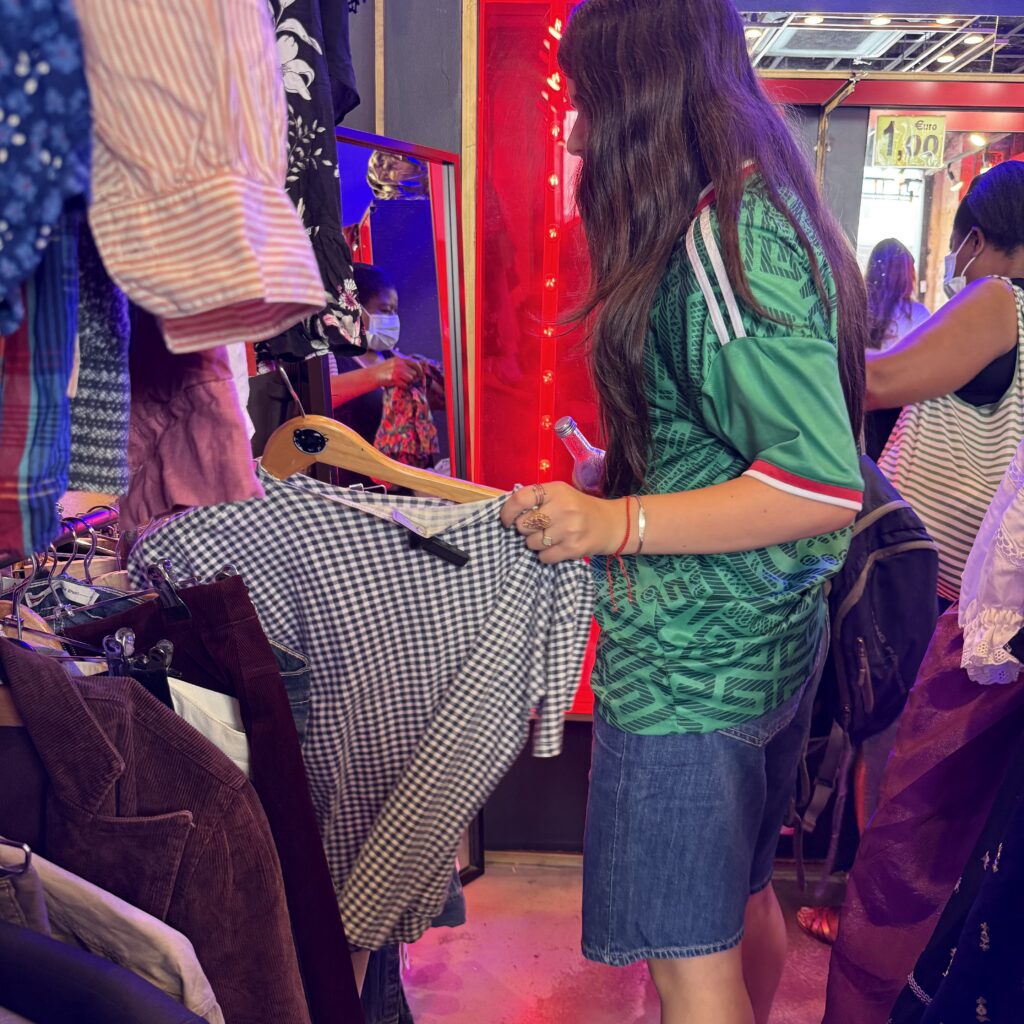
Paris vintage shopping can go two completely different directions. One involves archival Chanel and Saint Laurent with four-digit price tags. The other involves digging through a bin wondering whether the €10 jacket in your hand is genius or horrifying.
For teenagers, the second version is usually considerably more fun.
In the Marais, start with Kilo Shop on Rue de la Verrerie. Clothing is priced according to weight, making the shopping experience unusually interactive: the colored tag determines the price per kilo, so shoppers can estimate what that denim jacket is going to cost before committing. (Kilo Shop)
A few minutes away, Free’P’Star is more chaotic and arguably more fun. Multiple Marais locations carry densely packed secondhand and vintage clothing, including rock-inspired pieces and 1970s stock. This is a shop where patience matters. (Instagram)
Those two shops also teach teenagers one of the key rules of European vintage shopping: “vintage” doesn’t necessarily mean expensive. Sometimes it just means you need to dig.
Listen to: Paris Strut Here in the Cerca Guide to Paris for more fashion.
What to eat
This part of Paris has an important historic Jewish community, particularly around Rue des Rosiers. Try a falafel, then stop for Jewish pastries or a slice of cheesecake.
For the extremely French second round, get a crêpe or pain au chocolat and eat it while walking. No need to turn every Paris food experience into a reservation.
Don’t miss
The Place des Vosges is one of Paris’s loveliest squares and an excellent place to decompress after shopping. Sit under the arcades or on the lawn when it is open.
Then wander deeper into the Marais rather than immediately returning to the Seine. The neighborhood’s medieval street pattern, private mansions and small museums are part of why this area feels different from Haussmann’s grand boulevards.
Cultural tip: In small French boutiques, greet the staff when you enter—”Bonjour”—and say “Merci, au revoir” when leaving. It is a small thing, but culturally significant.
Responsible-travel angle: Vintage shopping is already a more circular way to consume fashion, but the bigger win here is spending at long-established independent neighborhood businesses rather than only international chains.
4. Kreuzberg, Berlin, Germany
Best for: Alternative style, workwear and genuinely cheap finds
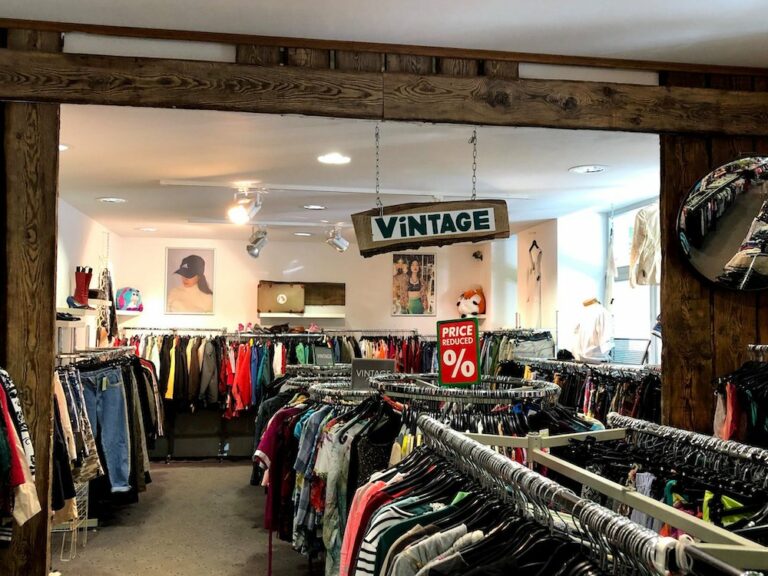
Berlin may be Europe’s ultimate city for teenagers who don’t want to dress like everyone else.
While Berlin’s secondhand scene spreads across several neighborhoods, Kreuzberg is a particularly good base because vintage shopping sits naturally alongside record stores, street art, Turkish bakeries, cafés and counterculture.
A good starting point is PICKNWEIGHT, Berlin’s well-known kilo-shopping concept. The stores organize secondhand and vintage clothing using color-coded price categories, creating exactly the kind of treasure-hunting experience teenagers tend to love. (PICKNWEIGHT)
Berlin is also famous for HUMANA, whose enormous secondhand stores often feel more like thrift warehouses than boutiques. Even where you encounter one outside Kreuzberg proper, it is worth adding to a Berlin shopping day. Berlin’s official tourism site continues to recommend secondhand shopping as a major part of the city’s retail culture. (visitBerlin)
Expect military jackets, denim, 1990s sportswear, techno-adjacent black everything and the occasional piece you cannot believe somebody ever manufactured.
What to eat
Kreuzberg’s Turkish community profoundly shaped the neighborhood, so eat accordingly.
A döner kebab is the obvious teenager-friendly choice, but don’t stop there. Try gözleme, pide or lahmacun, then find baklava and strong Turkish tea.
Berliners will debate döner shops with the seriousness Americans reserve for barbecue.
Don’t miss
Walk along the East Side Gallery if your route takes you toward Friedrichshain, or explore the graffiti and murals around Kreuzberg itself.
Another great teenage activity is simply hanging out beside the Landwehr Canal with snacks when the weather is good. Berlin rewards unstructured time.
A note on etiquette
Berlin customer service can seem brusque to Americans. Don’t automatically interpret it as hostility. Germans generally don’t perform the American “Hi! How’s your day going?” retail ritual.
And carry some cash. Germany is much more card-friendly than it once was, but small businesses and flea-market stalls can still be surprisingly old-school.
Sustainability: Berlin’s secondhand ecosystem isn’t merely tourist entertainment; reusing clothing is mainstream here. Participating in that culture is one of the easiest ways travelers can consume more responsibly.
5. El Raval, Barcelona, Spain
Best for: 1990s American vintage, graphic tees and kilo-shopping
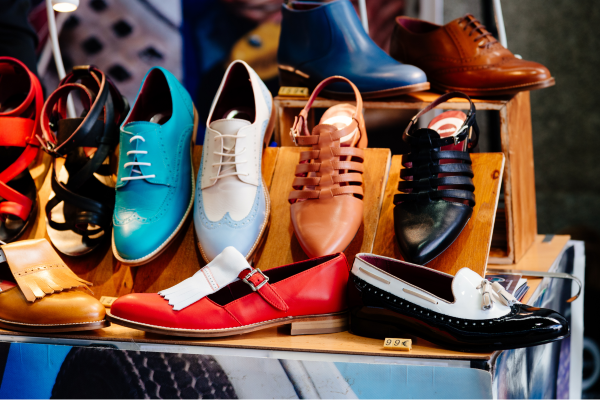
Barcelona has excellent shopping almost everywhere, but El Raval gives teenagers the most interesting mix of cheap vintage, skate culture, sneakers and gritty urban energy.
The heart of the hunt is around Carrer dels Tallers.
Flamingos Vintage Kilo is one of Barcelona’s best-known vintage shops. Its concept is exactly what the name suggests: clothing is sold by weight, with lots of American sportswear, graphic tees, denim, sweatshirts and oversized jackets. (Hotel)
The company dates its operation to 2009 and now has a broad international presence, but Barcelona remains one of the places where the kilo-shopping concept feels particularly at home. (Instagram)
Then simply continue along Tallers and surrounding Raval streets. There are enough secondhand shops that shopping works best as a scavenger hunt rather than a checklist.
What to eat
Barcelona’s most useful teen snack is also one of Catalonia’s simplest pleasures: pa amb tomàquet, bread rubbed with tomato, olive oil and salt.
Add jamón or cheese if you want lunch.
For something sweet, try crema catalana, and if you’re visiting in warm weather, stop for gelato before continuing toward the Gothic Quarter.
Don’t miss
The MACBA, Barcelona’s contemporary-art museum, is nearby. Even teenagers uninterested in going inside may enjoy the plaza outside, one of Barcelona’s iconic skateboarding gathering places.
Continue toward the Boqueria, but recognize that this historic market is increasingly crowded with visitors. Rather than treating it as a food theme park, buy from actual produce, fish and prepared-food vendors and behave as you would at a neighborhood market.
Cultural note
Barcelona is in Catalonia. You’ll see and hear both Catalan and Spanish. A simple bon dia is a pleasant acknowledgment of the local language.
Why this is a strong responsible-shopping stop: El Raval is a real, diverse residential neighborhood facing significant tourism and gentrification pressures. Shopping independently and eating at neighborhood businesses rather than multinational chains sends more visitor spending into the local economy.
6. Monti, Rome, Italy
Best for: Vintage leather, Italian cool and mixing shopping with major sights

Rome probably isn’t the first place teenagers associate with vintage clothing. That is precisely why Monti is such a good surprise.
This small neighborhood sits remarkably close to the Colosseum but feels dramatically more local once you duck into its streets. Wine bars, boutiques, cafés and vintage shops occupy buildings that look as though they have been standing there forever.
Start at Pifebo on Via dei Serpenti. Pifebo specializes in vintage clothing for men and women, particularly the kind of 1980s- and 1990s-influenced pieces teenagers currently wear again: leather, denim, windbreakers and oversized sportswear. (Pifebo)
Also look at Humana Vintage Monti on Via Leonina. The shop offers organized secondhand and vintage rather than luxury resale and remains a good option for teens operating on an actual budget. (corner)
Monti has long been regarded as one of Rome’s better districts for indie boutiques and vintage shopping. (Condé Nast Traveler)
What to eat
Rome makes lunch easy.
Get pizza al taglio, Roman pizza sold in rectangular slices by weight, or track down a supplì—a fried rice croquette traditionally filled with tomato, rice and mozzarella.
For dinner, go Roman: cacio e pepe, carbonara, amatriciana or gricia.
Teenagers who claim they don’t like “Italian food” tend to reconsider surprisingly quickly.
Don’t miss
The Colosseum is close enough that pairing the two is almost absurdly easy, but I’d also spend time around Piazza della Madonna dei Monti, where locals sit around the fountain chatting well into the evening.
Rather than rushing through another attraction, get gelato and hang out.
Cultural note
Vintage-shopping etiquette in Rome is more boutique-like than warehouse-like. Don’t pull entire racks apart and abandon clothing everywhere. Ask before photographing inside small stores.
And remember that “vintage” in Italy sometimes means truly curated vintage, not cheap thrift. Look at prices before falling in love.
Sustainability: Buying a vintage Italian leather jacket rather than a new fast-fashion imitation is a particularly satisfying way to bring home something connected to Italy’s long tradition of garment craftsmanship.
7. Waterlooplein & the Old Center, Amsterdam, Netherlands
Best for: Flea-market treasure hunting
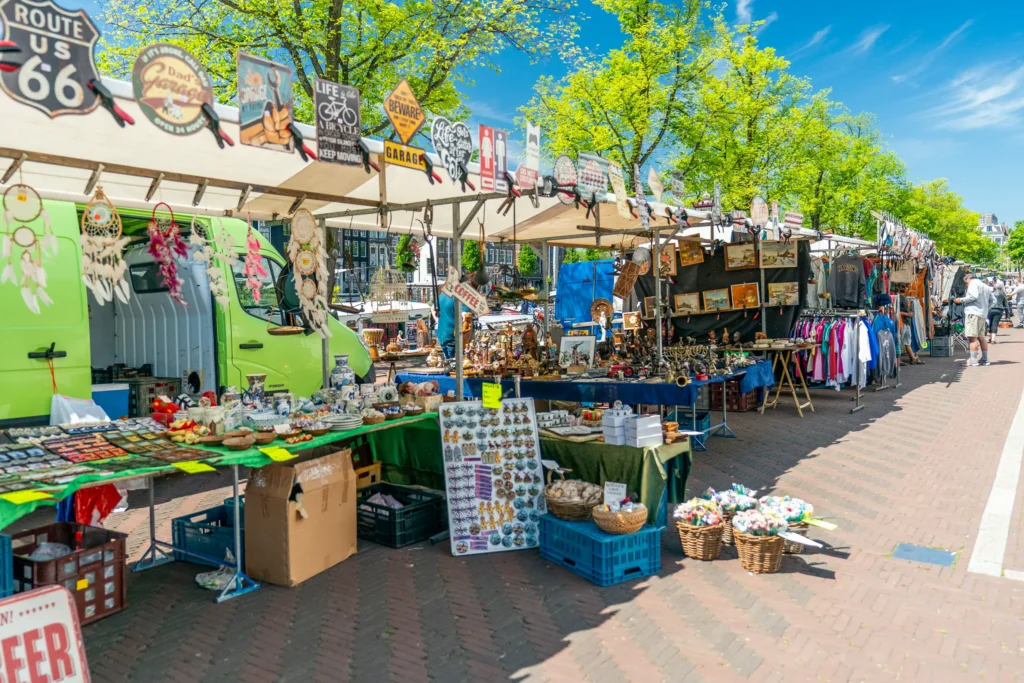
Amsterdam offers one of Europe’s most appealing combinations of bicycles, youth culture and secondhand shopping.
The centerpiece is Waterlooplein Market, a historic flea market with hundreds of vendors selling clothing, records, jewelry, cameras and miscellaneous objects you didn’t know you needed until approximately four seconds ago. Vogue’s recent vintage guide highlights it as the Netherlands’ oldest flea market and one of Amsterdam’s core vintage destinations. (Vogue)
Nearby, add Episode, one of Europe’s strongest secondhand chains. The company repairs, redesigns and recycles used fashion and currently operates multiple Amsterdam locations. (Episode)
If you want a more curated stop, detour toward the Nine Streets for Zipper, a family-run Amsterdam vintage business dating to 1979, with hand-picked American and European clothing. (Zipper Vintage Clothing)
What to eat
At some point, acquire a warm stroopwafel.
Yes, they’re tourist-famous now. No, that doesn’t make hot caramel pressed between thin waffles any less delicious.
For something savory, try patat—Dutch fries, ideally loaded with mayonnaise or one of the more elaborate sauces—or a paper cone of fried fish.
Don’t miss
Instead of taking only a large canal cruise, spend some time walking the smaller canals.
The Negen Straatjes, or Nine Streets, make a logical continuation of a shopping day and mix boutiques, cafés and architecture without requiring another major attraction.
Responsible travel
Amsterdam is struggling with intense tourism pressure in its center. One of the best things families can do is spend time somewhere rather than treating the city as a checklist.
Don’t walk in bike lanes. Seriously. Amsterdam cyclists are not decorative.
Buying secondhand and supporting independent retailers is good; respecting a neighborhood’s everyday function is equally important.
8. Nørrebro, Copenhagen, Denmark
Best for: Scandinavian style without Scandinavian designer prices
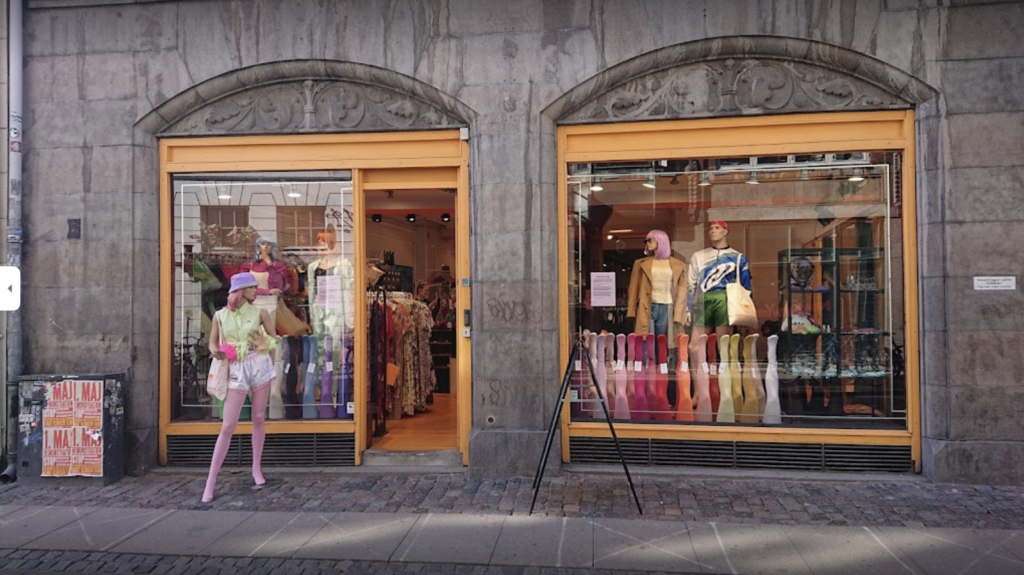
For a teenager who likes Copenhagen fashion but whose budget does not extend to a new Ganni wardrobe, Nørrebro is the move.
Copenhagen’s secondhand culture fits naturally with the city’s broader interest in circular consumption, reuse and sustainable fashion. Recent coverage has described Copenhagen as a major vintage-shopping destination, with resale increasingly embedded in the city’s fashion culture. (Financial Times)
Start with PRAG Nørrebro at Nørrebrogade 45. The store has operated here since 2012 and combines proper vintage with more recent secondhand clothing, making it accessible to teens who may be hunting for a 1990s jacket rather than a museum-quality 1960s dress. (PRAG COPENHAGEN)
Then continue up Nørrebrogade to Genbro, a 400-square-meter secondhand shop selling clothing along with furniture, books, art and Danish design. This is a particularly good stop for teens who want weird décor or objects for their rooms in addition to clothes. (Genbro)
What to eat
Nørrebro is one of Copenhagen’s most multicultural neighborhoods, so do not feel obligated to eat fancy New Nordic food.
A shawarma is entirely appropriate here.
For something distinctly Danish, find a bakery and order a kanelsnegl, the Danish cinnamon swirl, or cardamom pastry.
Copenhagen bakeries are next-level.
Don’t miss
Walk through Assistens Cemetery, where Søren Kierkegaard and Hans Christian Andersen are buried. Unlike many cemeteries, it also functions as a leafy neighborhood park.
Then continue toward Jægersborggade, a compact street filled with ceramics, food shops, cafés and independent design businesses.
Cultural tip
Danes value personal space and low-key interaction. Loudly performing enthusiasm for every object in a tiny shop may be distinctly less Copenhagen than quietly saying, “This is really good.”
And rent bikes only if everyone in the family is already a confident urban cyclist. Copenhagen bike lanes operate like transportation infrastructure, not amusement rides.
Responsible-travel bonus: Genbro explicitly frames its mission around recycling and extending the useful life of goods, making this one of the strongest circular-economy stops on the list. (Genbro)
9. Anjos & Intendente, Lisbon, Portugal
Best for: Affordable vintage in a neighborhood that still feels lived-in
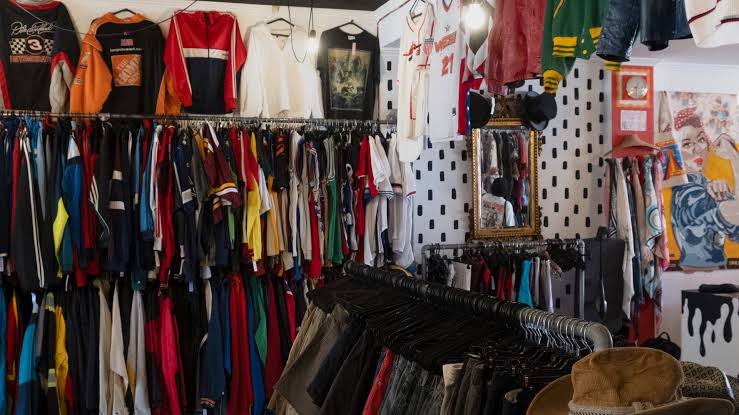
Lisbon’s popularity exploded during the last decade, and some central neighborhoods now feel heavily oriented toward visitors. Anjos and Intendente offer something more interesting for teenagers: street art, immigrant-run restaurants, cafés, inexpensive shops and a youthful creative scene.
Start at Retro City Lisboa on Rua Maria Andrade. The shop specializes in clothing from roughly the 1950s through the early 2000s and has been operating in Anjos since 2016. Expect leather jackets, hats, belts, footwear and plenty of color. (Next Stop Lisbon)
Then look for one of Lisbon’s Humana shops. Humana operates an extensive Portuguese secondhand network whose explicit mission includes sustainable textile reuse and circular consumption. (Humana Portugal)
Lisbon reportedly has numerous Humana branches, so this is one city where it is worth searching the closest location on the day you visit rather than building an itinerary around a single shop. (Lisboa Secreta)
What to eat
This is Lisbon, so at some point there must be a pastel de nata.
But teenagers should also try a bifana, Portugal’s magnificent no-nonsense pork sandwich, or a prego, a garlicky beef sandwich.
For the adventurous eater, share Portuguese tinned seafood—sardines, mackerel or octopus with bread.
Don’t miss
Stop at Largo do Intendente and look at the extraordinary tiled façade of the historic Viúva Lamego ceramics building, an important piece of Lisbon’s azulejo tradition. (Wikipedia)
Then walk rather than immediately calling an Uber. This part of Lisbon is full of tile-covered façades, street art and little businesses worth noticing.
Cultural and sustainability note
Lisbon’s housing market has been heavily affected by tourism and short-term rentals. Travelers can’t fix that individually, but they can make choices that keep more money within the community: independent restaurants, Portuguese businesses, locally made goods and secondhand shops.
Vintage shopping is an especially good souvenir strategy here because Lisbon’s traditional crafts—ceramics, textiles, leather and cork—can also be mixed into the hunt.
10. Kammenstraat, Sint-Andries & Central Antwerp, Belgium
Best for: Fashion-obsessed teens who actually know who Dries Van Noten is
Antwerp is the sleeper hit on this list.
It is dramatically smaller than London or Paris but carries outsized importance in European fashion. The Royal Academy of Fine Arts produced the legendary Antwerp Six, and the city still supports an unusual concentration of designers, fashion students, independent boutiques and resale stores. Recent fashion coverage continues to describe Antwerp as one of Europe’s alternative style capitals. (The Guardian)
Teenagers who care about clothing—not merely shopping—may find Antwerp more inspiring than almost anywhere else on this list.
Look for Think Twice, a Belgian secondhand chain with Antwerp locations and an emphasis on affordable vintage and circular fashion. (Facebook)
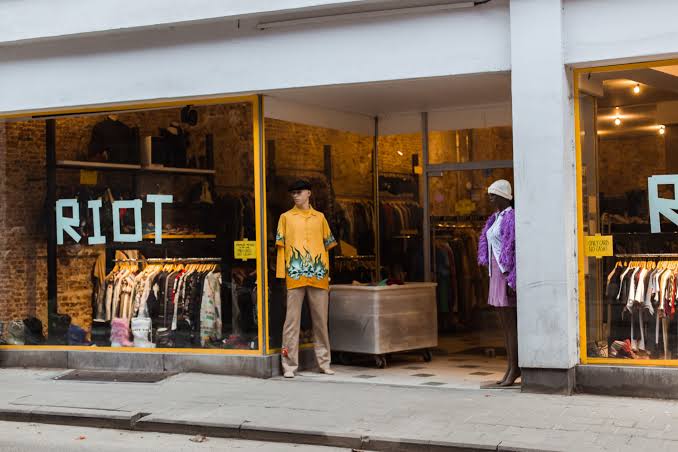
Also investigate RIOT, which specializes in hand-picked secondhand fashion and operates in Antwerp. (Instagram)
Then wander toward Kloosterstraat, Antwerp’s famous strip of antiques, vintage objects, furniture, design stores and galleries. The street remains particularly lively on Sundays, when many shops elsewhere in Antwerp are closed. (A Place | Antwerp)
This is a great place to expand the idea of “vintage” beyond clothes. Teenagers might leave with sunglasses, an old print, jewelry or a strange piece of Belgian design instead.
What to eat
Two words: Belgian fries.
Order them from a frituur in a paper cone with mayonnaise. Teenagers skeptical of mayonnaise on fries generally need about four bites to convert.
Then get a Belgian waffle—but understand that “Belgian waffle” isn’t really a single thing. Brussels-style waffles are lighter and crispier; Liège waffles are denser, sweeter and caramelized.
Antwerp also has excellent bakeries and a strong café culture.
Don’t miss
Fashion lovers should make time for MoMu, Antwerp’s fashion museum. Unlike a generic costume museum, it puts the city’s avant-garde fashion legacy into context.
Antwerp is also compact enough that you can walk from fashion shops to the cathedral, historic center and river without turning the day into a logistical operation.
Why Antwerp matters
It exposes teenagers to a form of fashion culture that isn’t dominated by multinational brands. Antwerp still celebrates experimentation, craftsmanship and emerging designers. Supporting small vintage dealers, student designers and local boutiques helps sustain precisely the ecosystem that makes the city special.
Which Neighborhood Is Best for You?
For the serious bargain hunter: Brighton in London, Berlin and Lisbon.
For Y2K and streetwear: Brick Lane in London, Barcelona and Berlin.
For fashion-obsessed teens: Paris, Copenhagen and Antwerp.
For the best mix of major sightseeing + vintage shopping: Rome and Paris.
For teens who want freedom to wander: Brighton, Copenhagen and Antwerp are particularly manageable.
For the purest treasure-hunting experience: Waterlooplein in Amsterdam or a kilo shop in Paris, Barcelona or Berlin.
And one strategy works everywhere: give teenagers a fixed amount of spending money and resist the urge to supervise every purchase. A €25 jacket they discover themselves often becomes more meaningful than the €100 souvenir a parent chooses for them.
Why Vintage Shopping Can Be One of the Better Ways to Travel With Teenagers
There is a surprisingly meaningful travel lesson hidden inside all this shopping.
Vintage stores reveal what people in a city actually wore. Football shirts tell you which clubs matter. Old work jackets reveal industrial history. Local designer pieces tell you what fashion looked like before Instagram flattened style into the same five trends everywhere.
And unlike shopping at the same global chains found in Los Angeles, New York or a suburban mall, secondhand shopping is inherently unpredictable.
You don’t know what you’re going to find.
That sense of discovery is exactly what teenagers often want from travel—and exactly what adults accidentally remove when every hour of a European vacation is planned in advance.
So spend a morning at the Louvre or Colosseum. Absolutely see the cathedral.
Then give them an afternoon and say, “You’ve got €40. Go find something brilliant.”
There’s a pretty good chance that battered jacket becomes the thing they remember.