

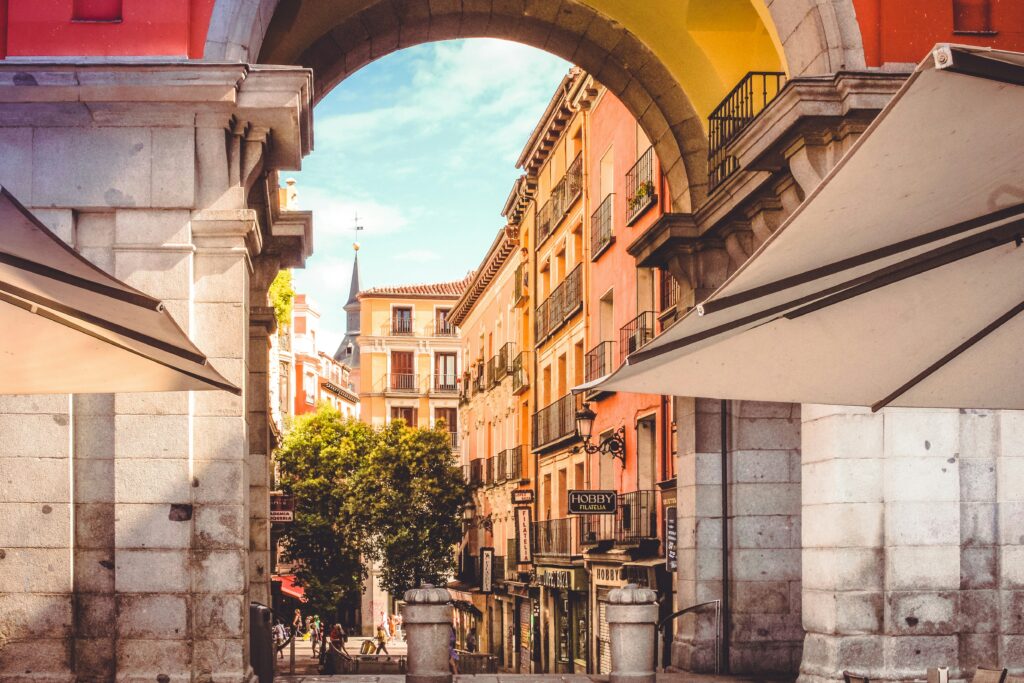
Madrid is one of Europe’s easiest major capitals to enjoy as a family. It has monumental museums and royal palaces, sure, but much of the city’s charm happens somewhere less dramatic: on a neighborhood plaza at 7 p.m., when children are still kicking a ball around, grandparents are occupying the prime benches, and parents are lingering over drinks while keeping half an eye on the playground.
That everyday street life, the vibe that you’ll be immersed in, is precisely why choosing the right neighborhood matters.
Stay too close to Puerta del Sol or Plaza Mayor and you may find yourself surrounded by souvenir shops, tour groups and restaurant menus translated into seven languages. Those locations are undeniably convenient, but they feel like what they are: a processing zone, rather than the Madrid people actually live in. At the other extreme, staying too far outside the center can mean repeatedly taking the Metro simply to begin your day. (The Madrid metro is fast, easy, and clean, but still, sometimes you want to hop out your door and be somewhere.)
The sweet spot is a residential barrio close enough to walk to major sights, or reach them with a quick, uncomplicated Metro ride, but far enough from the tourist core to retain its bakeries, produce markets, schools, playgrounds and local rituals.
The six neighborhoods below offer different versions of that balance.
Some are elegant, some creative, some wonderfully ordinary. All give families access to parks, food, culture and transportation without depositing them directly in Madrid’s busiest tourist corridors.
At a glance: which Madrid neighborhood is right for your family?
Best all-around choice: Chamberí
Best with younger children: Ibiza–Retiro
Best with teenagers: Argüelles
Best for culture-loving families: Conde Duque
Best for biking and outdoor space: Legazpi and La Chopera
Best value close to the center: Pacífico and Adelfas
A practical note about safety: Madrid is generally comfortable for family travel, and these areas are largely residential and well trafficked. Still, no city neighborhood is crime-free. The issue visitors are most likely to encounter is opportunistic theft in crowded transport hubs and heavily visited central areas, rather than trouble on quiet residential streets. Carry phones and wallets securely, particularly on the Metro, around Atocha and when visiting places such as Sol, Gran Vía and Plaza Mayor.
For more on Spain, Cerca produced a hilarious (not-safe-for-work) episode of MisInfoNation just for you!
1. Chamberí: The best all-around neighborhood for families
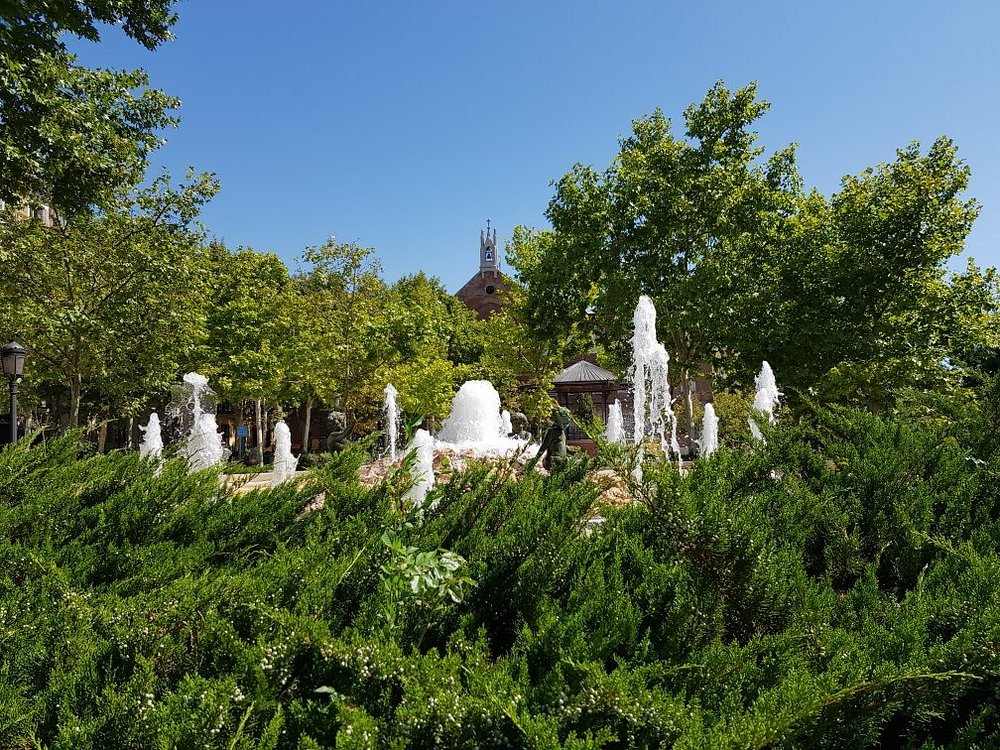
Chamberí is the neighborhood many visitors imagine when they say they want to “live like a local” in Madrid. It feels polished without being sterile, traditional without seeming frozen in time, and central without being overrun by sightseeing traffic.
Technically, Chamberí is a district containing several barrios, including Trafalgar, Almagro, Arapiles, Ríos Rosas, Gaztambide and Vallehermoso. For a family vacation, the most appealing zones are around Plaza de Olavide, Trafalgar, Arapiles and the southern edge of Vallehermoso.
The architecture is unmistakably madrileño: handsome apartment buildings, wrought-iron balconies, tiled entrances and neighborhood businesses occupying the ground floors. In the morning, you will see parents walking children to school and residents stopping for coffee at the same bars they have probably frequented for years. In the evening, the plazas fill up again.
Madrid’s official tourism guide describes Chamberí as a traditional district with aristocratic architecture and notes that plazas and streets around Olavide and Quevedo remain important gathering places for the local aperitif ritual. The district also contains cultural venues, historic taverns and several municipal markets. (EsMadrid)
Why Chamberí works so well with children
The neighborhood’s greatest advantage is balance. You are close enough to walk south toward Malasaña, Gran Vía and central Madrid, but you return at night to streets that feel markedly calmer.
Plaza de Olavide is the neighborhood’s outdoor living room. It is broad, pedestrian-friendly and ringed with terraces, making it easier for adults to have a coffee or an early drink without requiring children to sit motionless through a formal meal. Younger kids can move around the plaza; older children and teenagers can safely develop a little independence within a bounded public space.
Chamberí is particularly good for mixed-age families. Small children benefit from plazas and everyday services. School-age children may enjoy the unusual Andén 0–Chamberí Station Museum, a preserved Metro station that closed in 1969. Teens get independent cafés, boutiques, record shops and easy access to Malasaña without having to sleep in the middle of its nightlife.
There are also excellent rainy-day options. The district includes the Teatros del Canal performing-arts complex, the Geological and Mining Museum and a number of cultural institutes and galleries. Madrid’s tourism authority highlights the neighborhood’s unusual mix of fossils, architecture, performance spaces and local history. (EsMadrid)
Where to stay within Chamberí
Look around:
- Plaza de Olavide and Trafalgar for the best mixture of terraces, neighborhood atmosphere and walkability.
- Arapiles, between Quevedo and San Bernardo, for good Metro connections and slightly quieter side streets.
- Vallehermoso, closer to the market, for a more residential stay with excellent food shopping.
- Almagro for an elegant, quieter and generally more expensive experience.
Families sensitive to noise should avoid apartments directly above the busiest bars on Plaza de Olavide. Staying one or two blocks away usually gives you the atmosphere without the late-night terrace soundtrack.
What to eat and where to experience local life
The Mercado de Vallehermoso is one of the best places in Madrid for families who like food but do not want every meal to become a formal restaurant event. The market combines traditional produce stalls with international cooking and places to eat on site. Its current official schedule includes daytime market hours and extended dining hours later in the week. (EsMadrid)
The traditional Mercado de Chamberí, which has operated since the 1940s, is another good window into neighborhood life. It remains a functioning market rather than merely a visitor attraction.
Try tortilla española, croquetas, jamón, or a simple breakfast of toasted bread with tomato and olive oil. For a distinctly Madrid dish, order cocido madrileño, a substantial chickpea, meat and vegetable stew traditionally served in stages.
A responsible way to experience Chamberí
Shop at the municipal markets, buy breakfast from an independent bakery and choose an apartment or licensed accommodation that does not displace permanent residents. Chamberí’s appeal depends on its everyday community, not on turning every building into short-term lodging.
Best for: First-time Madrid visitors, multigenerational trips and families wanting one neighborhood that does almost everything well.
2. Ibiza–Retiro: The best neighborhood for younger children and park-loving families
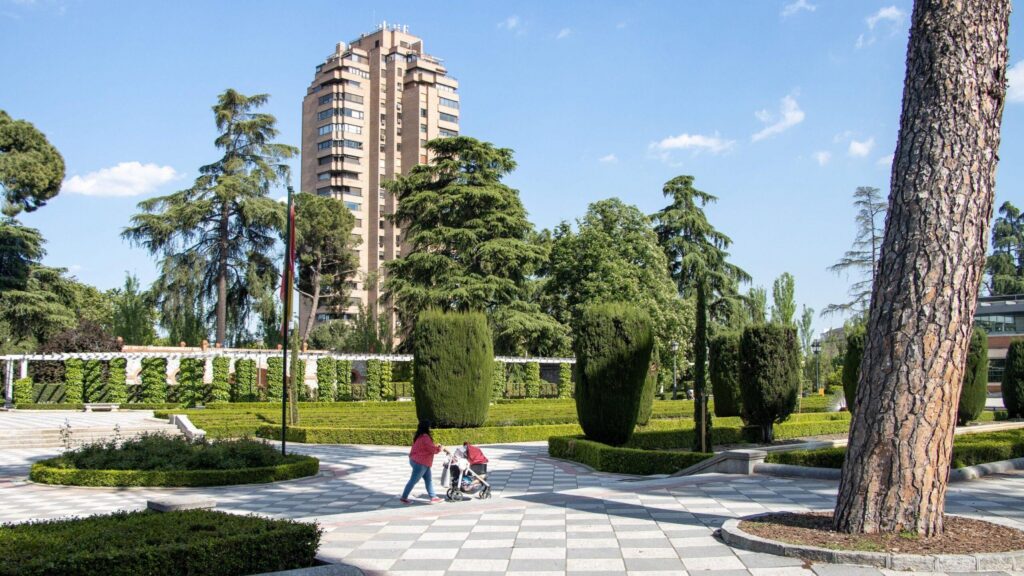
Not to be confused with the Mediterranean island, Madrid’s Ibiza barrio sits immediately east of El Retiro Park. This is one of the city’s most comfortable family bases, especially when traveling with young children who need generous amounts of outdoor time.
The neighborhood is residential, prosperous and orderly, with broad sidewalks, traditional apartment blocks and a huge selection of restaurants. Calle de Ibiza, Calle de Narváez, Calle de Menorca and Calle de Doctor Castelo form its liveliest core.
Madrid’s official neighborhood guide describes Retiro as largely residential, with wide pavements and tree-lined boulevards such as Ibiza and Alcalde Sainz de Baranda. It also identifies the Ibiza area as one of Madrid’s strongest concentrations of restaurants and taverns.
Why it is so easy with children
El Retiro is not simply a park you visit once and tick off a list. When you stay nearby, it becomes your backyard. And it’s spectacular.
You can enter in the morning for a playground session, return to your apartment for lunch and go back in the evening when temperatures cool down. Families can rent a rowboat, watch street performers, explore formal gardens, visit the rose garden or wander around the Palacio de Cristal area. The park contains multiple gardens and monumental spaces, and can be reached from the Ibiza and Retiro Metro stations, among others.
For toddlers and preschoolers, this access is a game changer. Madrid meals run late by American and northern European standards, and having somewhere to release energy before dinner can prevent a full family meltdown.
School-age children generally love boating on the lake and exploring the park’s winding paths. Teenagers can walk into the central museum district, rent bikes or spend time around the cafés on Calle Ibiza without feeling trapped in a children’s itinerary.
The neighborhood also works for grandparents. Streets tend to be flatter and less chaotic than the tightly packed lanes of the historic center, although Madrid’s summer heat still calls for sensible pacing.
Where to stay within Ibiza–Retiro
The ideal zone is between Calle de O’Donnell and Calle de Doce de Octubre, within a few blocks of the park.
Stay near:
- Calle de Ibiza for restaurants and direct park access.
- Calle de Menorca for a slightly quieter residential environment.
- Narváez for shops, bakeries, pharmacies and good transportation.
- Niño Jesús, just south of Ibiza, for an even calmer family atmosphere.
Avoid choosing solely by the word “Retiro” in a lodging description. Some properties marketed under that name may be much farther from the park than they appear. Check the actual walking route to an entrance.
Food and neighborhood rituals
The area around Ibiza and Narváez is excellent for tapas. Unlike Plaza Mayor, many restaurants here are serving residents, hospital workers and local families rather than depending entirely on visitors.
The official tourism guide specifically highlights the concentration of traditional and newer restaurants in the Ibiza district.
Visit Mercado Municipal de Ibiza to pick up fruit, cheese, bread or prepared foods for a park picnic.
Try a merienda, Spain’s late-afternoon snack. Children can have churros, pastries or ice cream, while adults order coffee. It is a useful bridge between lunch and a Madrid dinner that may not begin until 9 p.m.
The tradeoffs
Ibiza–Retiro is not Madrid’s cheapest neighborhood, and its restaurants can be busy. It is also less bohemian than Chamberí or Conde Duque. Families seeking street art, vintage shops and an alternative atmosphere may find it a little conservative.
But for ease, safety, park access and low-friction family days, it is hard to beat. Muy cómodo, as Madrileños might say: very comfortable, in the best possible way.
A regenerative way to enjoy Retiro
Treat the park as a living public landscape rather than an amusement venue. Use refillable bottles, stay on designated paths, avoid feeding wildlife and carry out picnic waste. Support neighborhood food shops instead of buying every snack from chains clustered around major entrances.
Best for: Families with children under ten, runners, park lovers and anyone visiting Madrid during warm weather.
3. Argüelles: The best neighborhood for families with teenagers
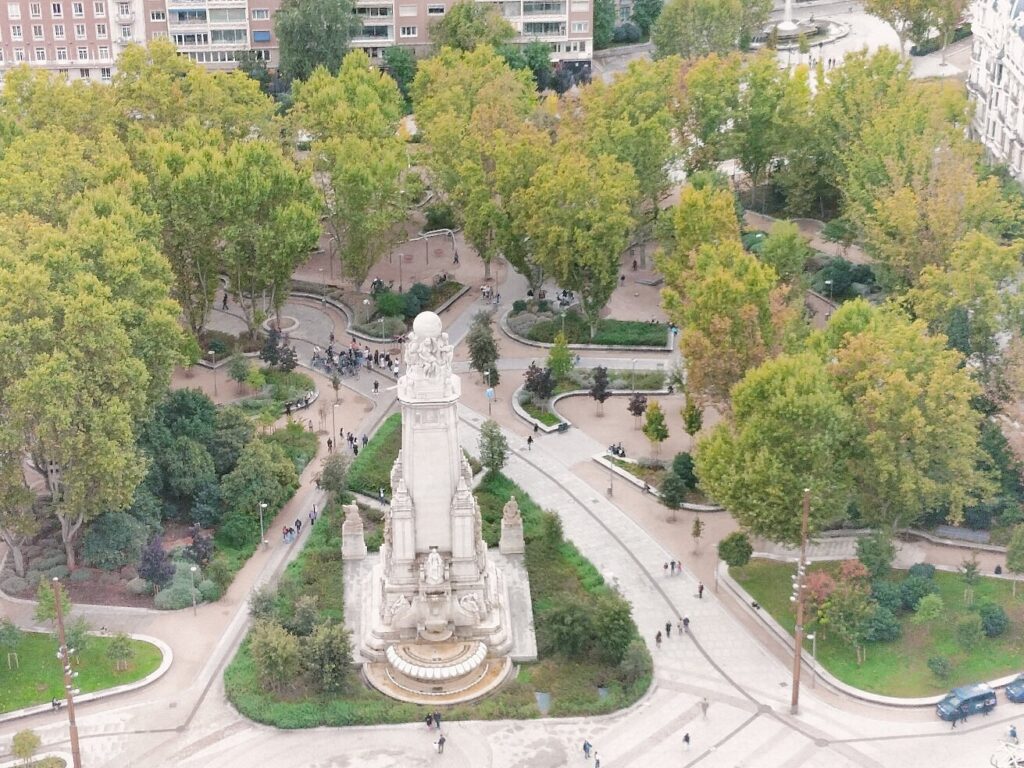
Argüelles stretches west of central Madrid between Plaza de España, Moncloa and Parque del Oeste. It feels youthful because of its proximity to universities, but it is not exclusively a student district. Its combination of shops, cinemas, cafés, parks and transportation makes it especially good for families with tweens and teenagers.
Calle Princesa is the neighborhood’s commercial spine. It is busy, bright and practical, with clothing stores, supermarkets and restaurants. The quieter streets running west from Princesa feel much more residential.
Unlike the historic center, Argüelles gives older children places they can plausibly explore on their own. A teenager can walk to an ice-cream shop, browse stores or meet the family at a café without navigating the crush around Sol.
Why teenagers tend to like it
Argüelles sits between several different versions of Madrid.
Walk east and you reach Plaza de España and Gran Vía. Walk west and you enter Parque del Oeste. Head south and you arrive at the Royal Palace and the gardens around it. Travel north and you are in Moncloa’s university zone.
That variety matters with older kids. A family can split up for an hour or two without everyone needing a separate taxi or complicated plan.
The neighborhood also offers easy access to the Teleférico de Madrid area and the Temple of Debod, one of the city’s best-known sunset locations. Parque del Oeste provides shade, trails and a welcome break from shopping and museums.
Madrid’s tourism guide identifies Princesa–Argüelles as a strong shopping and food corridor, including specialty grocers and long-standing ice-cream shops.
Argüelles also contains industrial and architectural remnants that reveal Madrid beyond its royal façade. One example is the former Richard Gans type foundry, described by the city’s tourism authority as a surviving piece of the capital’s transition into an industrial and cosmopolitan city.
Where to stay
The best family streets are generally west of Calle Princesa and south of Alberto Aguilera.
Consider:
- Calle de Altamirano and surrounding streets for quiet residential blocks.
- Near Parque del Oeste for greenery and morning walks.
- The southern end near Plaza de España for maximum sightseeing convenience.
- Around Ventura Rodríguez for a strong balance of transportation and neighborhood calm.
Avoid lodging directly on the noisiest sections of Princesa unless the building has excellent soundproofing. The avenue is useful, but sleeping above it is not always restful.
What to do nearby
Spend one evening walking through Parque del Oeste to the Temple of Debod, then have dinner back in the neighborhood rather than joining the crowds around Gran Vía.
Younger children may enjoy the playgrounds and open space, while teenagers often appreciate the sunset scene and chance to take photos. The neighborhood also provides easy access to Casa de Campo, Madrid’s enormous western green space.
For a low-key local experience, buy picnic provisions from a neighborhood grocer and eat in Parque del Oeste. This is cheaper, more relaxed and more environmentally responsible than relying on disposable takeaway meals from international chains.
Food to try
Look for restaurants serving food from Asturias, a northern Spanish region with deep culinary ties to Madrid. Order fabada, cachopo to share or Asturian cheeses. The neighborhood’s student presence also means there are many affordable international restaurants, useful when the family needs a break from multi-course Spanish meals.
The tradeoffs
Argüelles does not have the intimate plaza life of Chamberí, and Calle Princesa can feel commercially generic. Its topography also slopes toward the palace and river, which may matter with strollers or mobility limitations.
Nevertheless, it gives teens freedom, parents convenience and the entire family excellent access to both the historic center and major green spaces.
Best for: Families with tweens or teenagers, shoppers and visitors who want central access without sleeping in Centro.
4. Conde Duque: The best for creative, culture-loving families
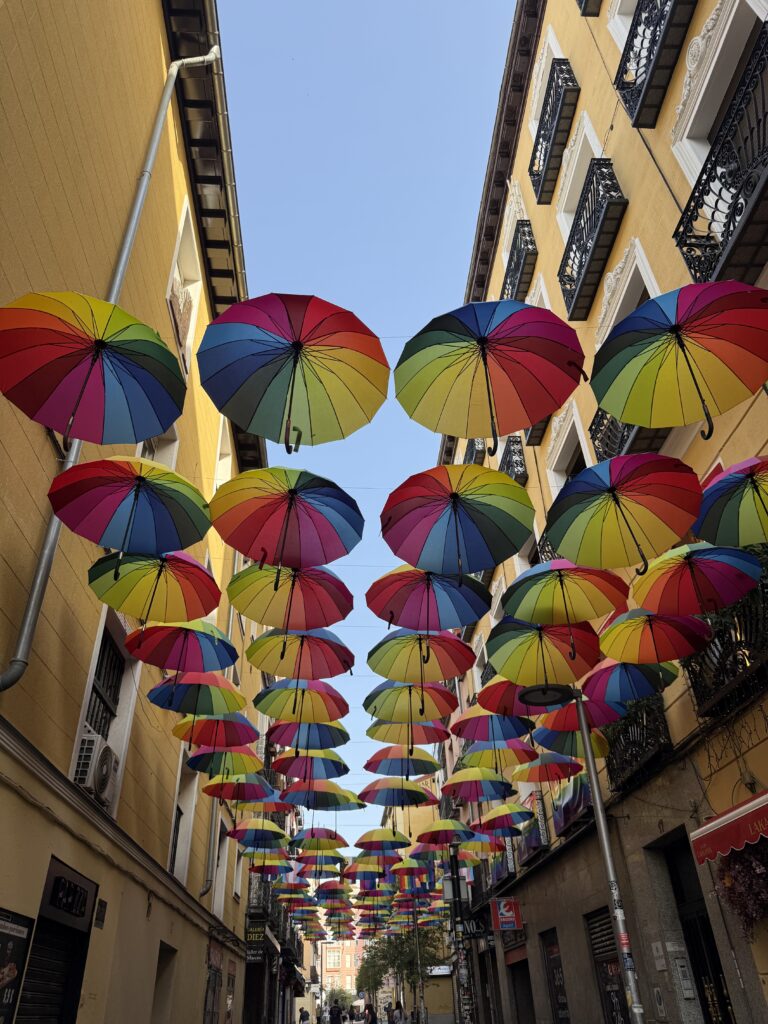
Conde Duque occupies a small pocket between Malasaña, Argüelles and Plaza de España. It is central enough that you can walk to many of Madrid’s headline sights, but its interior streets feel calmer and more residential than nearby Gran Vía.
The neighborhood grew around the enormous former military barracks now known as Centro de Cultura Contemporánea Condeduque. Independent bookshops, galleries, cafés and small design businesses have gathered around it.
Madrid’s official tourism site describes Conde Duque as quiet and peaceful compared with its noisier boundaries along Gran Vía, Plaza de España and Princesa. It also characterizes the area as bohemian, spontaneous and filled with modern shops carrying a vintage sensibility.
That is a pretty accurate summary: Conde Duque is creative, but not trying too hard to prove it.
Why families enjoy it
The cultural center hosts exhibitions, performances, concerts and community events, some of which are appropriate for children or teenagers. Even when nothing specific is scheduled, the large historic complex gives the neighborhood a strong identity.
The surrounding streets are easy to explore on foot. From here, families can walk to:
- Plaza de España
- The Temple of Debod
- The Royal Palace
- Gran Vía
- Malasaña (fantastic for lively nightlife you can watch from your windows)
- Parque del Oeste
The difference is that you can retreat afterward to a quieter café or residential side street.
Conde Duque is particularly appealing to families whose children dislike conventional sightseeing. Instead of scheduling another grand museum, spend time browsing a comic shop, seeing a contemporary exhibition, choosing a book in Spanish or sitting in a plaza watching neighborhood life.
Teenagers will find the area cool without its being dominated by clubs. Younger children benefit from small plazas and the relatively manageable scale.
Where to stay
Look around:
- Calle del Conde Duque
- Calle del Limón
- Calle de Amaniel
- Plaza de las Comendadoras
- The western side near Calle de la Princesa
Plaza de las Comendadoras is especially attractive for families because it creates a natural neighborhood gathering place. As always in Madrid, rooms facing a popular plaza may experience evening noise, so internal bedrooms or upper floors are helpful.
Eating and drinking as a family
This is a neighborhood for small-scale eating: vermouth bars, bakeries, casual restaurants and cafés. Order a vermut de grifo, vermouth served from the tap, while children have olives, crisps or a soft drink. The pre-lunch vermouth ritual is one of the easiest ways for visiting families to participate in Madrid culture without staging an elaborate “authentic” experience.
For dinner, do not panic if restaurants look empty at 7:30 p.m. Locals often eat much later. Families can either embrace the schedule or seek cafés and newer restaurants that serve continuously.
The tradeoffs
Conde Duque borders Malasaña, and the closer you stay to that nightlife district or Gran Vía, the noisier the environment may become. The neighborhood also lacks a giant park directly at its center, although Parque del Oeste is walkable.
It is more central than the other recommendations in this guide, so you will see more visitors. The key distinction is that tourism has not completely erased its residential and cultural character.
Support the neighborhood responsibly
Choose independent bookstores, workshops and cultural venues. Avoid using residential doorways as photo backdrops or treating plazas as extensions of your rental apartment. Conde Duque remains appealing because people still live, study and work here.
Best for: Creative families, teenagers, repeat Madrid visitors and anyone who wants to walk almost everywhere.
5. Legazpi and La Chopera: The best for active families and contemporary culture
South of the traditional sightseeing center, Legazpi and La Chopera offer a completely different Madrid experience. This is where families can combine genuine residential life with the riverfront, playgrounds, cycling routes and one of the city’s most ambitious cultural complexes.
The defining attractions are Madrid Río and Matadero Madrid.
Madrid Río is a green corridor running for more than ten kilometers along the Manzanares, connecting parks, play areas, bridges and cultural sites. (EsMadrid) Matadero occupies a former slaughterhouse complex dating from the early 20th century that has been transformed into a major center for contemporary art, performance, film, design and public programs. (EsMadrid)
This area does not resemble postcard Madrid—and that is exactly the point.
Why active families should stay here
Madrid Río gives children room to run, cycle, skate and play without every outing becoming a negotiation around traffic. The park includes fitness areas, games tables, bridges and cultural programming, while Matadero adds exhibitions, performances and indoor options. (EsMadrid)
For families traveling with bikes, scooters or energetic school-age children, this may be the easiest neighborhood in central Madrid.
Matadero is particularly useful during extreme heat or rainy weather. Its program changes, but the complex contains spaces devoted to cinema, art, design and dance. Centro Danza Matadero, established as a public venue dedicated to multiple forms of dance, includes flamenco, Spanish, urban, classical and contemporary disciplines. (EsMadrid)
That variety makes the neighborhood appealing across ages. A five-year-old may care mostly about the playground. A ten-year-old may enjoy cycling across the sculptural bridges. A teenager may be genuinely interested in an installation, film or dance performance.
Where to stay
The most convenient zones are:
- Near Plaza de Legazpi for Metro access.
- La Chopera, between Matadero and the older residential streets.
- Near Paseo de las Delicias, for better access toward Atocha.
- Acacias or Imperial, farther north, if you want to be closer to Centro while retaining Madrid Río access.
Stay close enough to the river that you can use it spontaneously. A park loses much of its value if reaching it requires packing everyone onto the Metro.
Transportation and walkability
Legazpi is not within comfortable walking distance of every major Madrid sight, but it is well connected by Metro. You can also walk or cycle north along the river toward the Royal Palace area.
This is a good neighborhood for families who prefer one planned sightseeing excursion a day, followed by relaxed local time. It is less suitable for travelers who want to pop back and forth between the Prado, Gran Vía and their hotel repeatedly.
Food and local experience
The surrounding area reflects contemporary Madrid’s international population. You will find Spanish bars alongside Latin American, Asian and other global restaurants. Madrid’s official guide to eating around Matadero highlights the area’s wide culinary range rather than presenting it as a single traditional-food district. (EsMadrid)
Try bocadillo de calamares, Madrid’s famous fried-calamari sandwich, but also allow room for the neighborhood’s Ecuadorian, Peruvian and other immigrant cuisines. Eating only “historic” Spanish food can give visitors a strangely incomplete view of modern Madrid.
Sustainability advantage
This is the strongest neighborhood on the list for a lower-impact city break. Families can walk, cycle and use public transportation while spending time in a regenerated industrial complex and restored river corridor.
The responsible choice is to support Matadero’s public cultural programming, rent bikes from established providers and use the riverfront respectfully. Do not treat cycle lanes as playground extensions, and keep children aware of faster riders.
Best for: Active families, cyclists, contemporary-art fans and repeat visitors seeking a less obvious side of Madrid.
6. Pacífico and Adelfas: The best-value residential base near Retiro and Atocha
Pacífico and neighboring Adelfas sit southeast of El Retiro, beyond the areas most tourists consider when booking Madrid accommodation. They are not glamorous in the conventional sense. You will not step outside into a cinematic plaza lined with boutique hotels.
What you get instead is a functioning Madrid neighborhood: supermarkets, schools, bakeries, small playgrounds, cafés and apartment buildings occupied primarily by residents.
For many families, that normality is the luxury.
Pacífico is particularly useful because it sits between Retiro, Atocha and the southeastern residential districts. From the northern part of the neighborhood, families can walk to the quieter southern entrances of El Retiro. Metro connections make it straightforward to reach the center.
Why families should consider it
The main benefit is space and value. Apartments may offer more room for the price than comparable properties in Ibiza, Chamberí or central Madrid. That can matter enormously when traveling with children, especially for stays longer than a few nights.
The streets around Calle de Cavanilles, Avenida de la Ciudad de Barcelona and the northern edge of Adelfas contain plenty of everyday amenities. You can buy groceries without entering a gourmet market, find a pharmacy quickly and have breakfast in a café where the staff are not performing “Spanishness” for tourists.
Retiro remains close enough for regular visits, but you enter from its less ceremonious residential side. Atocha is also accessible, making Pacífico a strong choice for families planning day trips to Toledo, Segovia or other cities by train.
What different ages will enjoy
For younger children, the advantages are practical: quieter evenings, local playgrounds and less intense pedestrian traffic than the historic center.
School-age children can use Retiro as their primary recreation space. Teenagers gain fast transport to central Madrid while staying in a neighborhood where they may feel more like temporary residents than package tourists.
Pacífico also works for families who need a slower rhythm. You can spend the morning sightseeing, return for lunch and a rest, then head to Retiro or a local café in the evening.
Where to stay
Focus on the northern and western portions of Pacífico:
- Near Calle de Cavanilles for a pleasant residential atmosphere and park access.
- Around Menéndez Pelayo, provided the apartment is not directly exposed to heavy traffic.
- Near Pacífico Metro for excellent transportation.
- Northern Adelfas, for newer apartments and a calmer feel.
The farther southeast you move, the less walkable the major central attractions become. That is not necessarily a problem, but it changes the style of the trip.
Food and culture
This is not a destination dining district, which is part of its appeal. Follow residents into a neighborhood bar and order a menú del día, the fixed-price weekday lunch that generally includes a first course, main course, drink and dessert or coffee.
A menú del día is one of the best-value ways to eat in Madrid and an excellent cultural experience for families. Children can share dishes or try simple foods without committing to an expensive tasting menu.
Look for bakeries selling napolitanas, palmeras and empanadas, and fruit shops where you can stock the apartment for breakfast. These ordinary transactions create a more meaningful relationship with a place than rushing between “must-eat” restaurants.
The tradeoffs
Pacífico lacks the instant charm of Chamberí and the restaurant density of Ibiza. Most major attractions require either a purposeful walk or short Metro ride. Nightlife is limited, which may be a blessing or a drawback depending on your family.
This is the neighborhood for travelers who value comfort, affordability and local routine over prestige.
Travel responsibly here
Pacífico is a residential community, not an emerging tourist playground waiting to be “discovered.” Keep noise down in apartment buildings, use licensed accommodation and spend money at local businesses without treating the neighborhood as an exotic secret.
Best for: Longer stays, budget-conscious families, train-based day trips and travelers who want the least touristy experience on this list.
Final advice for staying in a Madrid neighborhood with children
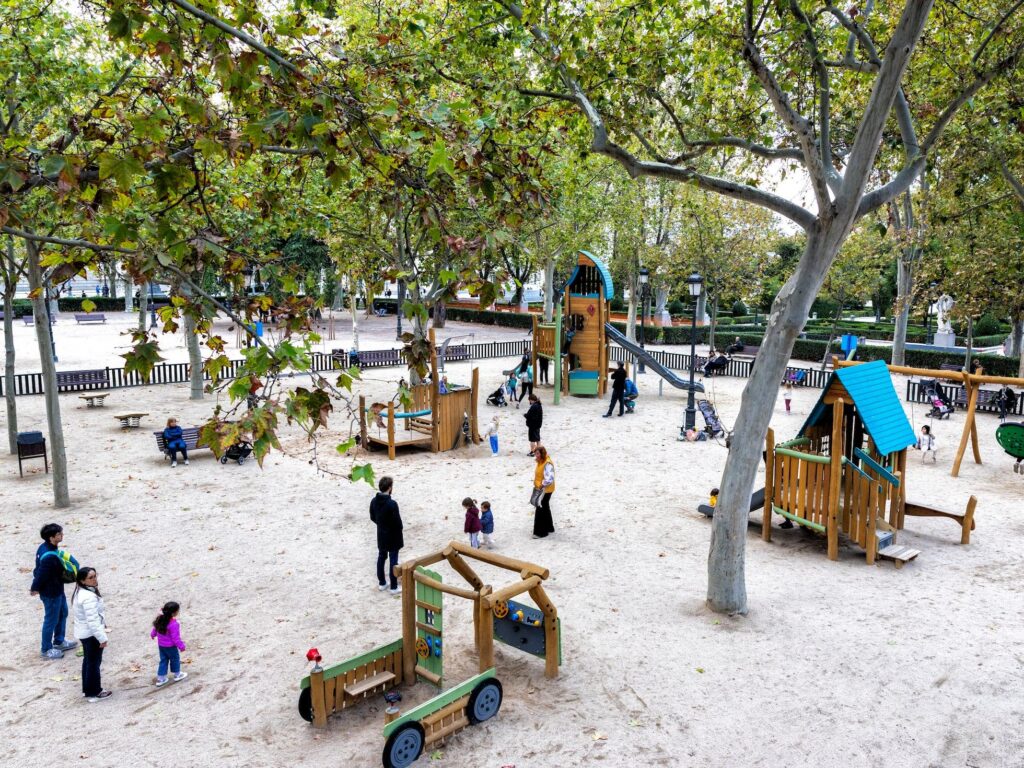
Madrid’s family life unfolds late. Playgrounds may still be active after 8 p.m., especially in summer. Dinner at 6 p.m. is possible in tourist areas, but it is not the local norm. Rather than fighting the schedule every day, shift gradually: eat a substantial lunch, take a late-afternoon merienda and have a lighter dinner.
Let plazas do some of the work. Madrid families do not necessarily organize every hour around ticketed attractions. Children play, adults talk and the neighborhood becomes the entertainment.
Use the Metro, but walk whenever the weather allows. Many of Madrid’s best moments occur between destinations: a tiled shopfront, a tiny bakery, a school letting out, or a bar where a plate of olives arrives with your drink.
Most importantly, remember that “living like a local” is not a product to purchase. It means adapting to the life already taking place around you: keeping apartment noise reasonable, greeting shopkeepers, respecting dining customs, supporting independent businesses and leaving public spaces as you found them.
Do that, and Madrid feels less like a checklist of museums and monuments and more like what it really is: a collection of lively, generous neighborhoods where families still occupy the city together.