


Paris with teenagers can be extraordinary and great for bonding, but only if you resist the urge to make it one long museum march. Teens want atmosphere, autonomy, snacks, pics that give them social currency, weird stories, cool shops, a little danger-but-not-actual-danger, and enough downtime to pretend they’re not enjoying themselves.
The trick is to build a trip that gives them both the Paris they’ve seen in movies and the Paris that feels current: street art, vintage fashion, football culture, rooftop views, must-have pharmacy finds and food they can brag about later. And give them a bit a freedom.
Here are eight experiences that hit that sweet spot.
1. Do the Eiffel Tower, but make it cinematic, not cheesy
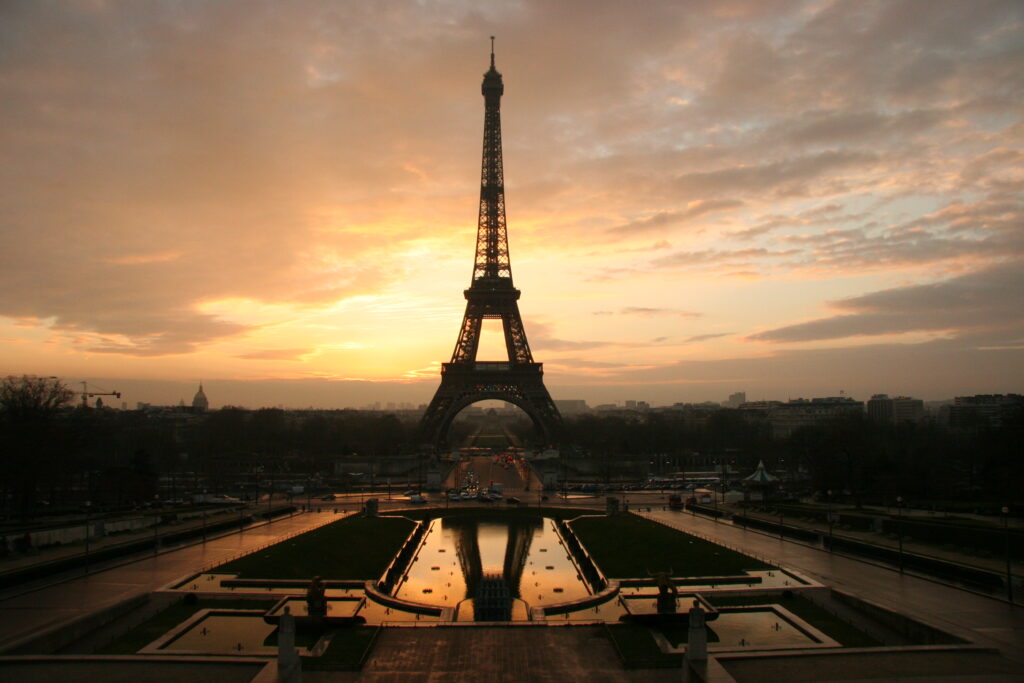
Yes, the Eiffel Tower is obvious. Do it anyway. For teenagers, the key is not just “see the tower,” but give them a version of it that feels like a scene. Start at Trocadéro for the wide-angle photo, walk down through the gardens, cross the Seine, then either go up the tower or picnic on the Champ de Mars. If your teens roll their eyes at landmarks, go at dusk when the city starts glowing and the tower sparkles on the hour.
Why it works for teens: it is the Paris image they already have in their heads. It is also social-media gold without needing to be overly staged. For active teens, add a Seine-side walk or bike ride afterward. The riverbanks are one of the best low-cost ways to feel Paris as a city people actually live in, not just visit.
What’s hot to buy or order: Crêpes from a nearby stand are the classic move — Nutella if they want the tourist comfort order, sucre-citron if they want to go more French. For a picnic, buy baguette sandwiches, Orangina, strawberries, and macarons from a neighborhood boulangerie rather than hauling everyone into a formal café.
Celebrity angle: The Eiffel Tower is less a celebrity hangout than a celebrity backdrop; everyone from fashion editors to actors ends up photographed around it during Paris Fashion Week. Fashion Week itself is a major moment when celebrities, designers, and models flood the city. (Jetset Times)
Cultural do/don’t: Do not buy from aggressive trinket sellers if you feel pressured. Do greet shopkeepers with “Bonjour” before ordering. Don’t block sidewalks or bike lanes for photos — Parisians have places to be, and they are not shy about letting you know.
Closest Metro: Trocadéro, Bir-Hakeim, École Militaire.
Sustainable/responsible note: Bring reusable water bottles and picnic supplies, and use the public fountains where available. A Seine walk or bike ride keeps the carbon footprint low and gives teens more agency than another car transfer.
2. Shop Le Marais: vintage, sneakers, beauty products, falafel
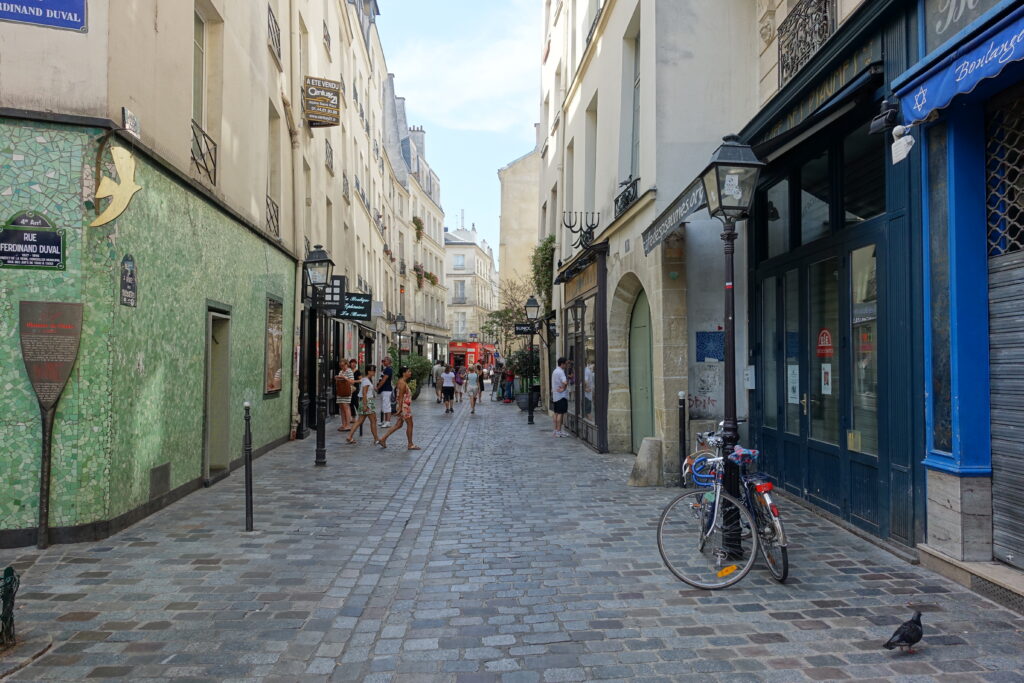
Le Marais is one of the best teen neighborhoods in Paris because it is dense, walkable, fashionable, and not just luxury. You can move from vintage stores to indie boutiques to Jewish bakeries to concept stores to little courtyards without the day feeling over-planned.
For style-conscious teens, make a route around Rue des Francs-Bourgeois, Rue Vieille du Temple, Rue de Turenne, Rue des Rosiers, and the northern edge of the Marais into the 3rd arrondissement. Paris has one of the strongest secondhand fashion scenes in the world, with Vogue calling its vintage landscape a “treasure-hunter’s dream.” (Vogue) Good stops include Bobby for premium secondhand, Open Dressing for newer cult labels, The Parisian Vintage for curated designer pieces, and Palace Callas for statement pieces with diva energy. (Vogue)
Also add Merci, the famous concept store in the upper Marais. Its original location mixes fashion, homeware, stationery, design, and café culture; Le Monde notes that the store is built around a warm, house-like concept with fashion, decoration, stationery, beauty, and a café-library. (Le Monde.fr) Merci’s newer second location, Merci#2, opened in a former 1950s post office near the Louvre and Palais-Royal, with a more industrial-artisanal feel. (Le Monde.fr)
Why it works for teens: this is Paris as identity-building. They can find something no one at home has, whether that is a vintage jacket, a tote, jewelry, perfume, sneakers, or a tiny notebook that suddenly becomes their “Paris journal.”
What’s hot to buy or order: Vintage denim, leather jackets, French pharmacy lip balm, niche perfume samples, tote bags, and anything from a small designer you can’t find in the U.S. Food-wise, the go-to order is falafel on Rue des Rosiers, a pistachio pastry, or an iced matcha/coffee from a tiny café.
Celebrity angle: Le Marais is more influencer/fashion-editor territory than red-carpet territory. For celebrity spotting, Fashion Week increases your odds citywide; Numéro’s Paris Fashion Week guide specifically frames the city’s trendiest restaurants, bars, and clubs as part of the runway-week ecosystem. (Numéro)
Cultural do/don’t: Don’t treat vintage shops like costume bins. Handle clothing gently, ask before photographing inside stores, and say “Bonjour” when you enter and “Merci, au revoir” when you leave. In small boutiques, browsing silently without greeting staff reads as rude.
Closest Metro: Saint-Paul, Hôtel de Ville, Rambuteau, Filles du Calvaire.
Sustainable/responsible note: Vintage shopping is one of the best teen-friendly sustainability wins in Paris. It supports circular fashion, avoids fast-fashion overbuying, and helps teens understand style as curation rather than consumption.
3. Go underground at the Paris Catacombs
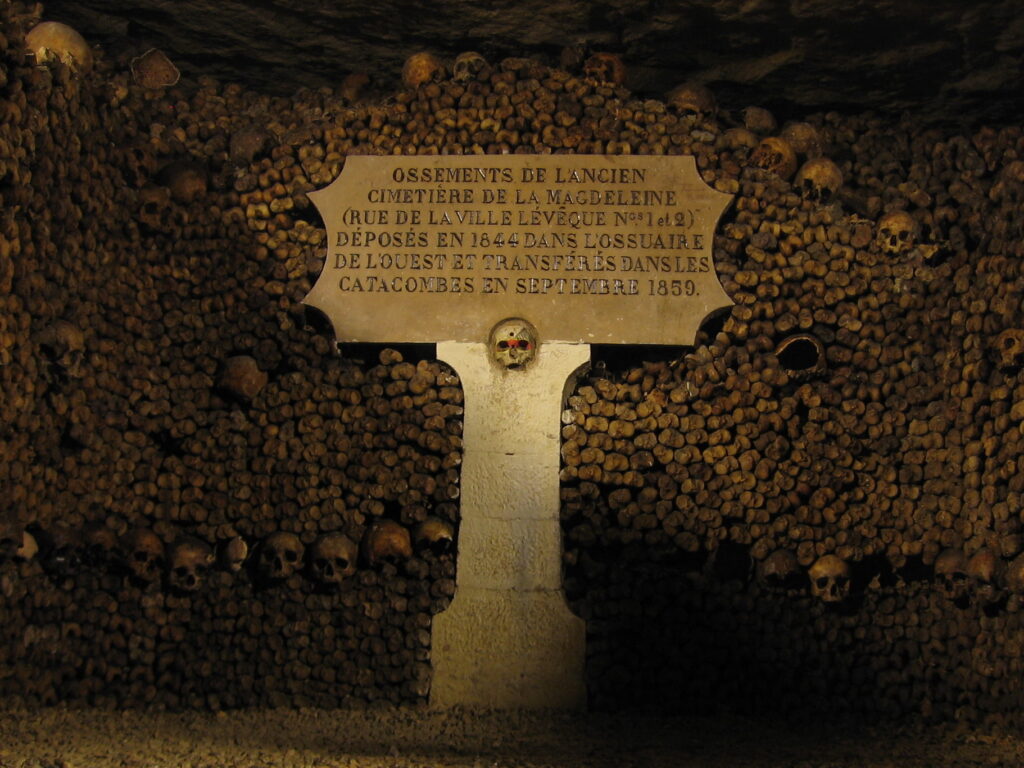
The Catacombs are perfect for teens who like history with a dark twist. This is not a cute museum. It is damp, dim, strange, and unforgettable. The remains of millions of Parisians arranged in underground ossuaries beneath the city.
Even teenagers who normally resist “educational” stops tend to lock in when the story involves cemeteries, plague-era overcrowding, tunnels, bones, and the hidden infrastructure of a major city. It also gives them a radically different Paris from the postcard version.
The official Catacombs site notes that the visitor route is 1.5 kilometers, one-way, takes about 45 minutes, stays around 14°C (just under 60°F), and involves 131 steps down and 112 steps up. It also warns about uneven, slippery floors, narrow passages, dim light, and restrictions for claustrophobia or mobility issues. Children under 14 must be accompanied by an adult. (Catacombes de Paris)
What’s hot to buy or order: The gift shop usually has skull-themed souvenirs, books, and history items. Afterward, reward everyone with crêpes, hot chocolate, or a proper lunch near Denfert-Rochereau. Kids who like Asian food may appreciate the low-key ramen and Asian casual spots scattered around the 14th – it’s one of the most eclectic food neighborhoods in Paris.
Cultural do/don’t: Absolutely do not touch the bones, use flash aggressively, or treat the space like a haunted-house attraction. It is a burial site. Keep voices low and be respectful. Also, do not bring large bags: the official rules allow only bags under 40 x 30 cm, carried in front or by hand, and there is no place to check bags. (Catacombes de Paris)
Closest Metro: Denfert-Rochereau, served by Metro and RER B. (Catacombes de Paris)
4. See immersive art at Atelier des Lumières, then eat your way through the 11th
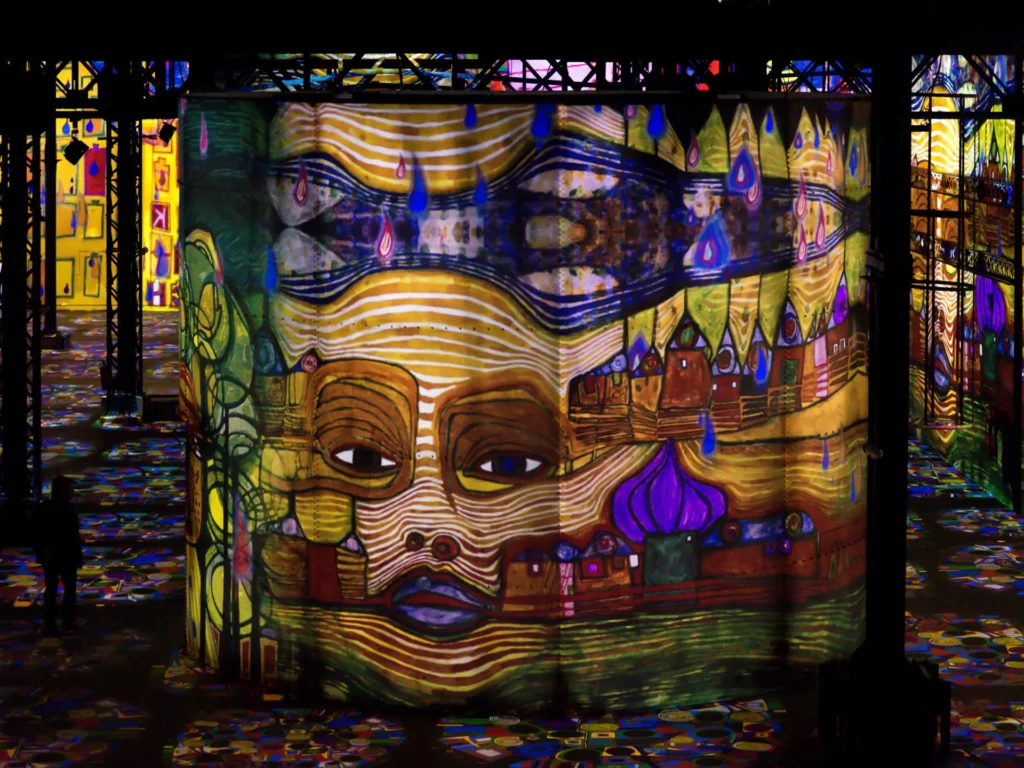
If your teen likes music, screens, animation, photography, or TikTok-friendly visuals, Atelier des Lumières is a strong choice. It is housed in a former steel foundry created in 1835 and became a digital art center in 2018. The venue presents immersive digital and contemporary exhibitions that surround visitors with moving images and sound. (Atelier des Lumières)
Why it works for teenagers: it feels less like being told to admire art and more like stepping inside a giant visual album. It is also a good rainy-day move and pairs beautifully with the 11th arrondissement, one of the better neighborhoods for casual, current food.
The official site describes the experience as one where “young and old alike” can explore immersive worlds and be carried into the heart of art, which is exactly why it works for multi-age families. (Atelier des Lumières) It is also at 38 rue Saint-Maur, making it easy to combine with Oberkampf, République, or Canal Saint-Martin. (Atelier des Lumières)
What’s hot to buy or order: Buy a poster, art postcard, or exhibition book if your kiddo is visual. Afterward, head toward Oberkampf for smash burgers, bao, ramen, natural-wine-adjacent small plates for parents, or excellent pastries. For something very Paris-right-now, look for a bakery doing creative viennoiserie, a bakery / patisserie pistachio, black sesame, raspberry, praline, or laminated-cookie hybrids.
Celebrity angle: This is more art-world and fashion-crowd adjacent than paparazzi territory. Nearby Oberkampf and the 11th are popular with stylish locals, chefs, designers, and music people, especially during Fashion Week when the city’s trend scene intensifies. (Numéro)
Cultural do/don’t: Don’t sit in the middle of a walkway for the perfect video. Move around, but be aware of people behind you. If your teen is filming, remind them not to capture strangers’ faces up close without consent.
Closest Metro: Rue Saint-Maur, Saint-Ambroise, Voltaire, Père Lachaise. RATP-connected information lists Rue Saint-Maur, Voltaire, Saint-Ambroise, and Père Lachaise as nearby Metro options. (Bonjour RATP)
Sustainable/responsible note: Pair this with walking and Metro rather than rideshares. The 11th is best experienced slowly, and supporting independent cafés and bakeries keeps money in neighborhood businesses.
5. Do a Belleville or Butte-aux-Cailles street-art walk
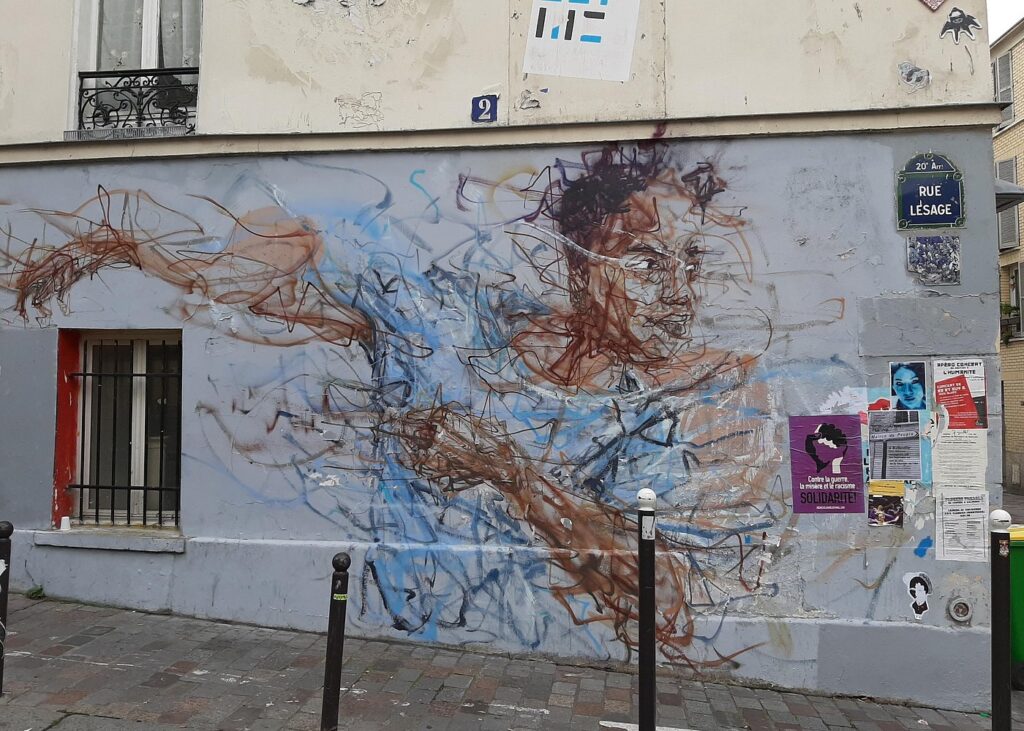
For teenagers who think the Louvre is “fine” but aren’t truly excited by it, street art is the move. Paris has a deep graffiti, stencil, mural, and collage culture, and the best neighborhoods for it feel completely different from the grand boulevards.
Belleville is edgy, diverse, hilly, and full of murals, cafés, and views. Butte-aux-Cailles is smaller and more village-like, with cobbled lanes and walls that reward slow wandering. France’s official tourism site highlights Butte-aux-Cailles for intimate cobblestone streets and stencils, while Belleville, Oberkampf, and Ménilmontant are described as areas where temporary murals, socially conscious collages, and spontaneous works create a vibrant Paris. (FRANCE.FR) The Paris Region tourism site also points to Butte-aux-Cailles as a place to see work by artists such as Jérôme Mesnager, Invader, and M.Chat. (Visit Paris Region)
Why it works for teens: it is active, visual, free, and a bit of a treasure hunt. Make it a challenge: who can spot the most Invader mosaics, the funniest stencil, or the best mural?
What’s hot to buy or order: In Belleville, order dumplings, bánh mì, bubble tea, or hand-pulled noodles. Vogue has described Belleville as a diverse, fashion-favorite neighborhood with strong food culture, street life, pop-ups, and panoramic views from Parc de Belleville. (Vogue) In Butte-aux-Cailles, look for crêpes, casual bistro food, or a neighborhood bakery.
Cultural do/don’t: Do not add your own tag. Admire, photograph, and learn — but don’t contribute unless you are part of a legal workshop. Also remember these are residential neighborhoods. Keep noise reasonable, especially in courtyards and narrow streets.
Closest Metro: Belleville, Couronnes, Pyrénées, Jourdain for Belleville; Corvisart, Place d’Italie, Tolbiac for Butte-aux-Cailles.
6. Hit Galeries Lafayette, the rooftop, and the new luxury-meets-food scene
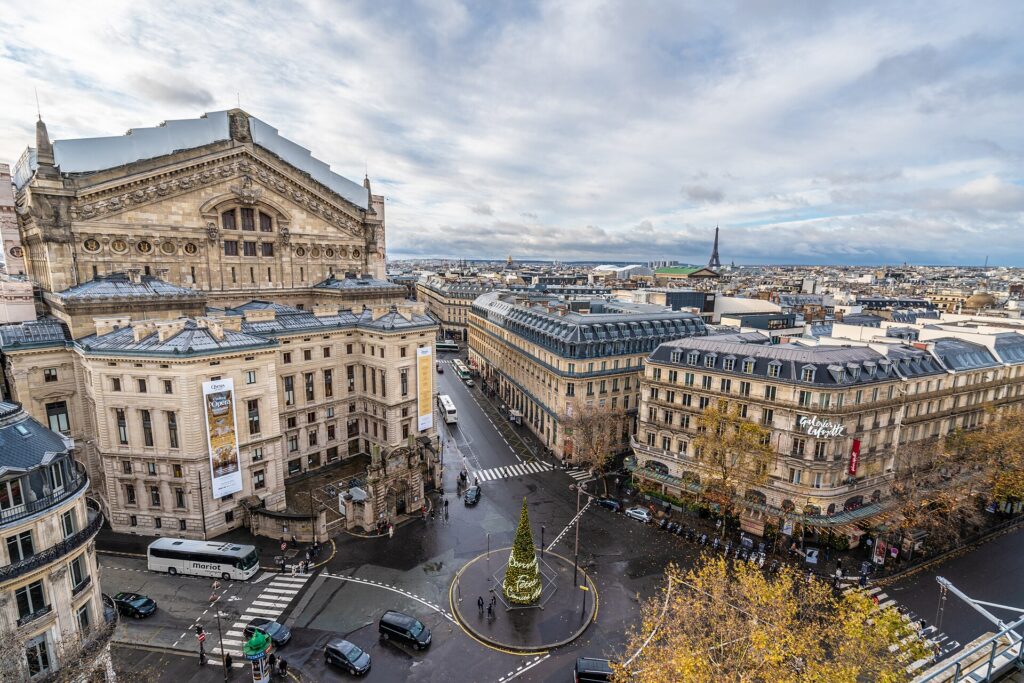
Department stores sound boring until you do them the Paris way. Galeries Lafayette Paris Haussmann gives teenagers fashion, beauty, souvenirs, architecture, and one of the best free-ish rooftop views in the city. The flagship is not just shopping; its own visitor information frames it as a French art de vivre experience with restaurants, wellness, services, and activities. (Haussmann Galeries Lafayette)
Why it works: it lets everyone browse without committing to one store. Beauty lovers can test perfume and lip products; fashion kids can look at French brands; sneaker kids can hunt limited styles; architecture kids can stand under the famous dome and pretend they are not impressed.
For a more modern concept-store angle, the Champs-Élysées Galeries Lafayette was designed to feel less like an old department store and more like a curated cultural retail space. Vogue reported that the Champs-Élysées location attracted younger, fashion-forward shoppers with exclusive drops, cultural events, collaborations, cafés, concerts, and artist appearances. (Vogue)
What’s hot to buy or order: French pharmacy skincare, perfume discovery sets, lip oils, soccer jerseys, fashion magazines, gourmet chocolate, and anything from a French brand that is hard to find back home. At food halls, go for éclairs, macarons, truffle chips, Alain Ducasse chocolate, or a fancy soda.
Celebrity angle: Galeries Lafayette and the surrounding Opéra/Haussmann district become especially buzzy during fashion periods. The Champs-Élysées opening and celebrations have drawn fashion-world names and designers; Vogue covered a Galeries Lafayette celebration with guests including Bianca Brandolini D’Adda, Delfina Delettrez, Gaia Repossi, and Simon Porte Jacquemus. (Vogue)
Closest Metro: Chaussée d’Antin–La Fayette, Opéra, Havre–Caumartin. Travel guidance notes that Chaussée d’Antin–La Fayette is the closest station, with Opéra and Havre–Caumartin also only a short walk away. (Independent Travel Cats)
7. Tour Parc des Princes or see a PSG match
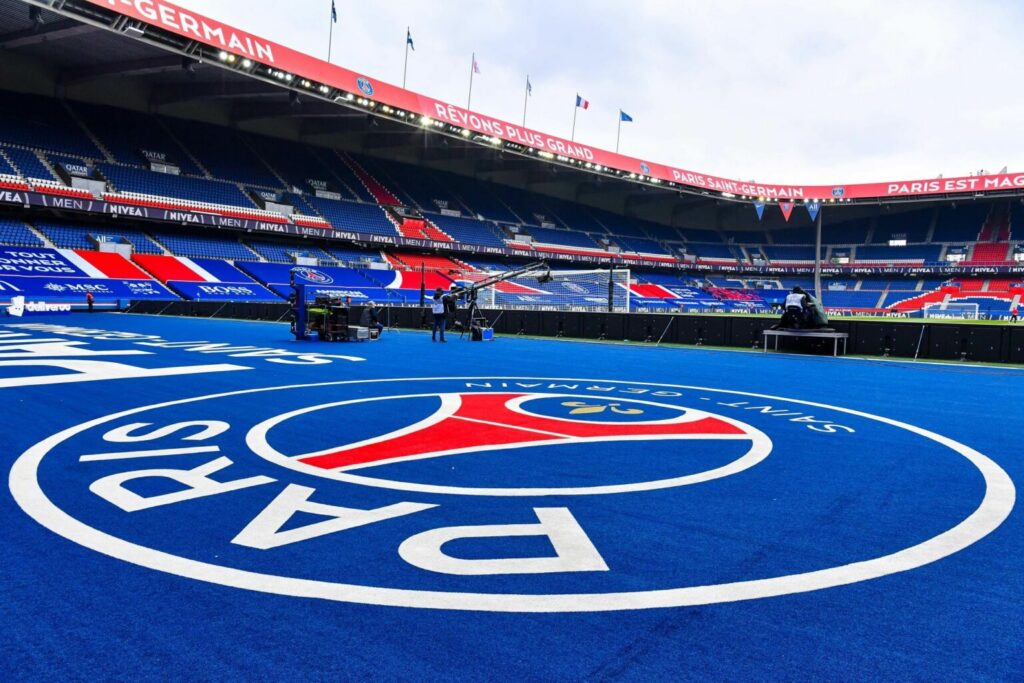
For futbol fans, Parc des Princes is a must. Even if your family is not deeply into soccer, Paris Saint-Germain, back-to-back Champions League winners, is part of modern Paris identity: global, flashy, dramatic, stylish, and very teen-coded. The stadium sits near the Bois de Boulogne and is the home of PSG, with a capacity of 47,929 according to the Paris tourist office. (Paris Je t’aime – Office de Tourisme) It hosts PSG home matches, European Cup matches, other sports events, and major concerts. (Paris Je t’aime – Office de Tourisme)
It’s a slice of Parisian culture that feels necessary even if you don’t follow European club soccer.
Club season is, roughly, September to May. If there is a match on when you go, even better. Be sure to book in advance. If there is no match, the stadium tour plus a PSG store stop still works.
Celebrity angle: PSG itself is the celebrity machine. The club has attracted global stars, and match days often bring athletes, musicians, and fashion people. Even without a sighting, the brand is celebrity-adjacent by nature.
Cultural do/don’t: Don’t wear the opposing team’s gear unless you are seated in the Away team’s section. Avoid ultra sections with younger teens unless you know what you are doing. Review what you can bring into the stadium before you go.
Closest Metro: Porte de Saint-Cloud, Exelmans. For nearby stadium-area access, check the event ticket instructions because gates and crowd controls can vary.
8. Montmartre at golden hour: Sacré-Cœur, portraits, stairs, music, and photos
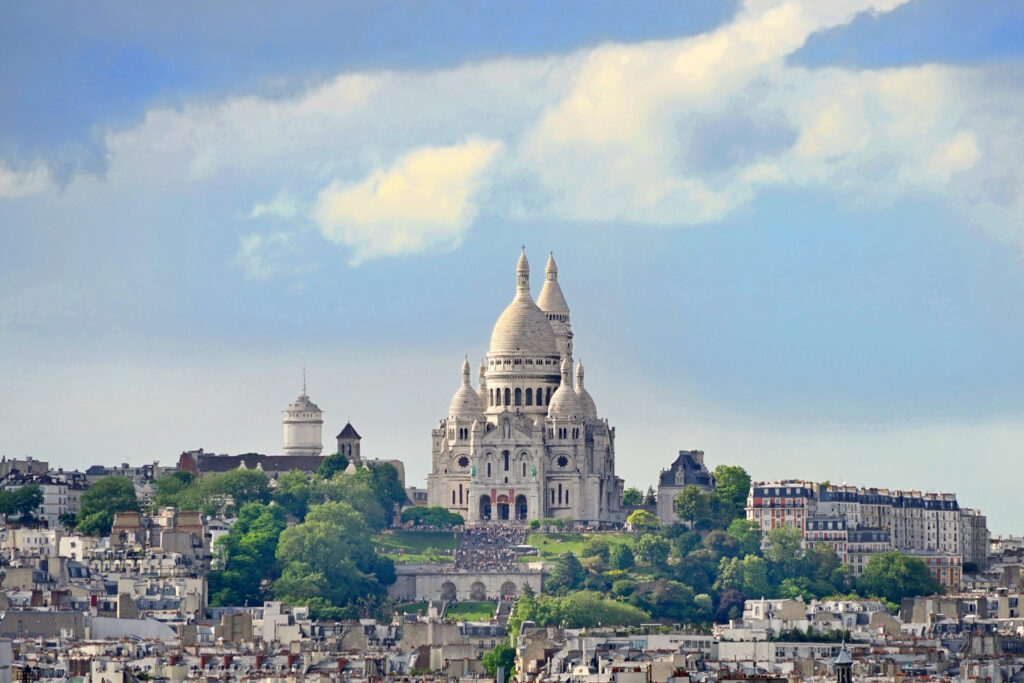
Montmartre can be touristy, but teens usually love it when you approach it as a neighborhood with layers: artists, staircases, views, buskers, old cabarets, tiny streets, and dramatic photo spots. Start lower down near Abbesses, wander upward through side streets, skip the most aggressive souvenir zones when needed, and end at Sacré-Cœur for sunset.
Why it works for kids: it is cinematic and active. There are stairs to climb, corners to photograph, musicians to listen to, and enough visual texture to keep everyone engaged. For creative teens, bring a small sketchbook or disposable camera. For social teens, this is one of the best places in Paris for casual portraits.
What’s hot to buy or order: A street portrait can be a great souvenir, but agree on price before sitting. Food-wise, get crêpes, gelato, or pastries. If you want something with teen appeal, look for photobooths, small jewelry shops, and vintage poster shops. Around Pigalle/South Pigalle, older teens may like the cooler café and music energy, but keep it daytime or early evening with families.
Celebrity angle: Montmartre itself has old-school fame more than modern paparazzi: Picasso, Modigliani, Toulouse-Lautrec, and the Moulin Rouge mythology. During Fashion Week, nearby boutique hotels and restaurants can draw stylish crowds, but this is better treated as “iconic Paris”.
Cultural do/don’t: Do not engage with bracelet scammers near the basilica steps. Be polite but firm: “Non, merci.” Inside Sacré-Cœur, dress and behave respectfully; it is an active religious site, not just a viewpoint. Keep voices low and do not photograph where signs prohibit it.
Closest Metro: Abbesses, Anvers, Lamarck–Caulaincourt.
For more tips and tricks – listen to our Paris episodes on all the basics START HERE, plus FASHION and ART.
Quick Paris etiquette guide:
Paris is not unfriendly; it is formal in small but important ways.
Always begin interactions with “Bonjour.” Say “s’il vous plaît” and “merci.”
Keep voices lower on the Metro than you would in the U.S.
Stand right and walk left on escalators.
Do not eat messy food inside small shops.
Don’t eat food while walking down the sidewalk – unless it’s a baguette.
Ask before taking close-up photos of people, artists, or shop interiors.
The best Paris trip with teenagers is not about making them love every monument. It is about giving them enough freedom, flavor, and cultural texture that the city becomes theirs. A little fashion, a little football, a little darkness, a little street art, a little sugar, a lot of walking. Très bien.