


Rome is ancient, dramatic, chaotic, cinematic, snack-heavy, fashion-conscious, and just a bit gritty. It is also one of those cities where your teenager can stand inside a 2,000-year-old stadium in the morning, buy vintage streetwear after lunch, eat carbonara in a neighborhood locals actually love, and end the night tossing a coin into the Trevi Fountain like they are in a movie.
A quick logistics note: Rome’s official ATAC app is useful for real-time bus, tram, and metro arrivals, route planning, digital tickets, service updates, and even ticket refunds for delays over 15 minutes. Public transport is usually the more sustainable choice, especially in the historic center where taxis crawl and ancient streets were not exactly designed for SUVs. (Atac)
But keep in mind – it’s Italy. There is no rushing – a meal, a bus, a morning – the only thing you’ll see moving with speed are the mopeds, so beware when crossing the street, but don’t expect your train to be on time.
Below are eight Rome experiences that mix blockbuster history, trendier neighborhoods, food, fashion, outdoor time, and teen-friendly culture without turning the trip into a forced march.
1. Go Underground at the Colosseum and Roman Forum
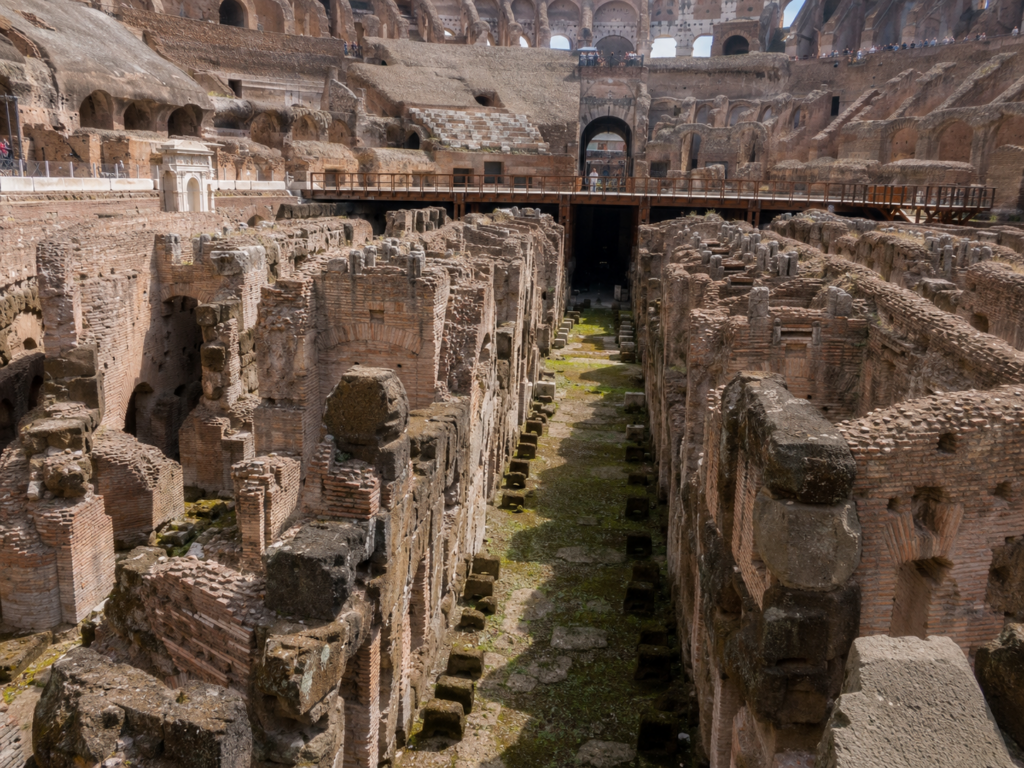
Best for: history lovers, sports kids, architecture fans, Gladiator-core teens, anyone who likes drama.
The Colosseum is the one Rome classic that still lands with teenagers because it does not require much imagination. It was a real arena, with trapdoors, crowds, athletes, violence, politics, status, spectacle, and all the social-media-worthy scale you could ask for. But the key upgrade is booking the Underground and Arena Floor experience. This gets teens below the main level into the hypogeum, where gladiators, animals, scenery, and stage machinery were held before appearing in the arena. The official Colosseum “Full Experience” ticket includes entry to the arena and underground levels at a booked time, plus access to the Roman Forum and Palatine area. (Colosseo Ticketing)
Why it works for teens: it makes Rome feel less like ruins and more like behind-the-scenes access. The underground turns the Colosseum from “old building” into “ancient production design.” Boys, girls, theater kids, sports kids, history kids, and kids who claim they hate history can all usually get into it.
What’s hot to buy/order nearby: Skip the tourist menus facing the Colosseum. Walk into Monti afterward for supplì, gelato, or a proper sandwich. If you want a quick Roman snack, look for supplì al telefono, fried rice balls with tomato and mozzarella that stretches like a cheese pull. Very teen-approved.
Celebrity angle: The Colosseum and nearby Roman Forum are celebrity magnets during major fashion events. Getty Images documented Erling Haaland outside the Dolce & Gabbana Alta Moda show at the Roman Forum in July 2025, and Zendaya and Robert Pattinson at Campidoglio in March 2026, showing how this ancient zone still doubles as a modern celebrity backdrop. (Getty Images)
Cultural dos and don’ts: Do not climb railings, carve names, remove stones, or stage risky selfies. Rome takes monument behavior seriously, and honestly, it is not the vibe. Dress for heat, especially in summer, it will be HOT. Bring water.
Best access: Metro B to Colosseo is easiest. From central areas like Pantheon, Piazza Navona, or Campo de’ Fiori, a taxi can be more direct, but traffic can be brutale. Public transport wins for sustainability.
2. Hunt Vintage, Sneakers, and Cool Cafés in Monti
Best for: fashion teens, artsy teens, sneaker kids, café wanderers, low-key shoppers.
Monti is one of the best neighborhoods in Rome for teenagers because it feels local, stylish, and not too polished. It sits close to the Colosseum but has a completely different personality: narrow streets, indie boutiques, vintage shops, small bars, and a creative, slightly bohemian energy. It is not “hidden” anymore, but it still feels cooler than the areas around the Spanish Steps, where the shopping can get very luxury-mall very fast.
Start around Piazza della Madonna dei Monti, then wander. This is the place to let teens browse vintage denim, sunglasses, jewelry, football scarves, handmade accessories, or Italian streetwear. Monti is especially good for teens who like to have a little freedom, because the area is compact and walkable. Parents can sit with an espresso while teens browse a few shops nearby.
What’s hot to buy/order: Vintage leather belts, retro football shirts (soccer jerseys are super hot right now), sunglasses, handmade jewelry, or an Italian graphic tee that does not scream “tourist.” For food, go for pizza al taglio, maritozzo, or gelato. A maritozzo is a Roman sweet bun split and filled with whipped cream; it is basically breakfast dessert, and teens usually understand the assignment immediately.
Cultural dos and don’ts: In small boutiques, greet the staff with “buongiorno” or “buonasera.” Teens do not need to be formal, but a basic greeting goes a long way. Do not handle delicate vintage pieces roughly, and do not bargain aggressively unless it is clearly a market stall.
Best access: Metro B to Cavour or Colosseo. Walk from the Colosseum in under 15 minutes. A taxi is unnecessary unless you are coming from far across the city.
Sustainable/local note: Shopping vintage is one of the easiest ways to make teen shopping more sustainable. It also keeps money in smaller local businesses rather than only international chains.
3. Eat Your Way Through Testaccio Market
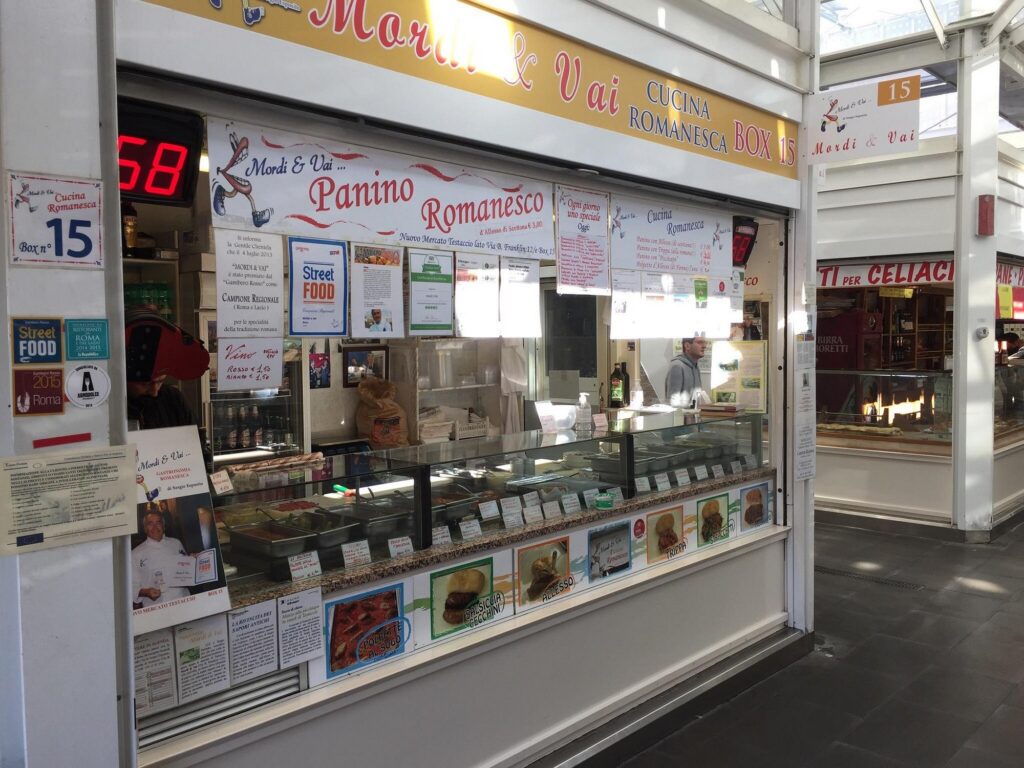
Best for: food teens, picky eaters, adventurous eaters, families who want authentic Rome without a fancy restaurant.
Testaccio is where Rome gets delicious without trying too hard. The neighborhood has deep working-class food roots, and Mercato Testaccio is one of the best places to let teenagers graze. It is especially strong because it mixes produce, butchers, bakeries, and street-food stalls in one place. Michelin’s travel coverage highlights Rome’s street-food markets as places for quick lunches, aperitivo snacks, and affordable dishes made with excellent ingredients, while food writers consistently single out Testaccio Market for street food and lunch. (Michelin Guide)
This is a great “everyone gets what they want” stop. One person can get pizza, another can get a sandwich, another can try pasta or fried snacks, and no one has to sit through a long meal. It is casual, sensory, and very Rome.
What’s hot to order:
Get pizza al taglio, a Roman sandwich from Mordi e Vai if available, fresh fruit, maritozzo, or anything involving artichokes when in season. For brave eaters, Testaccio is also the spiritual home of Roman quinto quarto cooking, the offal-based tradition that came from using every part of the animal. That is regenerative eating before it was trendy: less waste, more tradition, more respect for ingredients.
Cultural dos and don’ts: Markets are not museums. Buy something if you are taking up space, do not touch produce unless invited, and be patient if locals are doing their actual daily shopping. A little “grazie” goes far.
Best access: Metro B to Piramide, then walk. You can also combine it with Aventine Hill or the Protestant Cemetery. Taxi is fine from central Rome if you are short on time, but Metro B is easy and lower-impact.
4. Rent Bikes or a Surrey in Villa Borghese
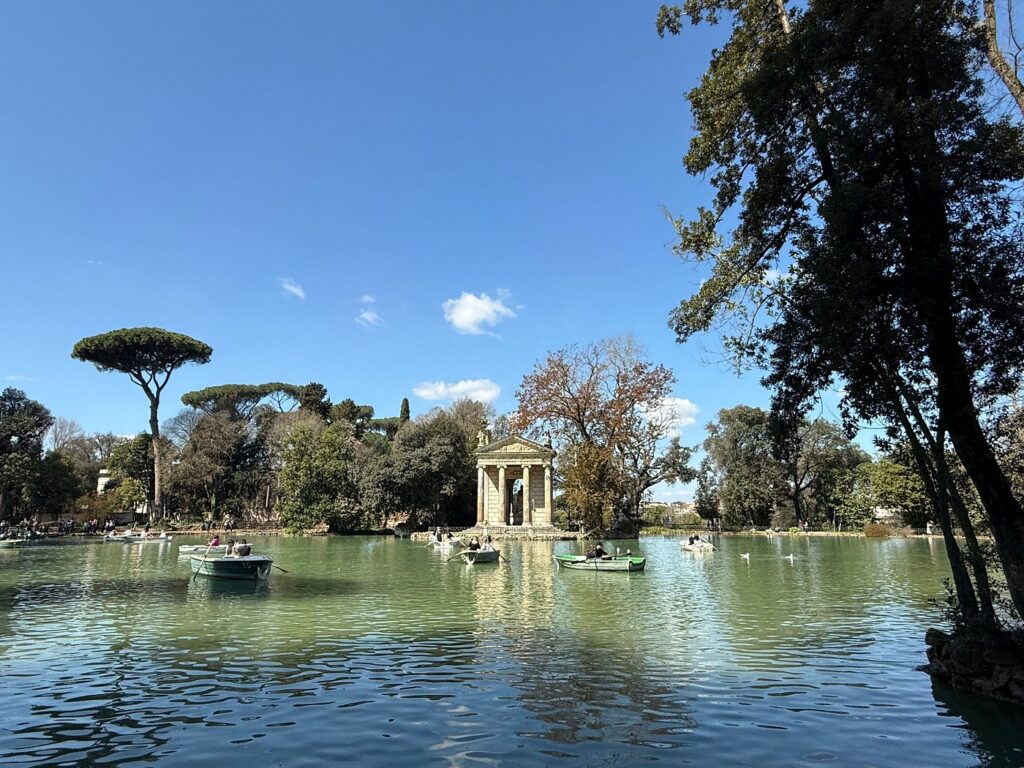
Best for: active teens, younger teens, families needing a break from churches and ruins.
Villa Borghese is Rome’s pressure-release valve. After a few days of heat, crowds, and cobblestones, teenagers need movement and green space. The park is large enough to feel like a reset, and renting bikes, e-bikes, pedal carts, or a family surrey turns it into something playful instead of another walk. Nearby Pincio Terrace also gives you one of the best sunset views over Piazza del Popolo.
If your teen is sporty, this is a win. If your teen is not sporty, a goofy multi-person bike can still be funny enough to work. You can pair the ride with the Borghese Gallery if your family likes art, but do not overload it. Sometimes the best Rome activity is simply letting everyone breathe.
What’s hot to buy/order: Bring picnic snacks: focaccia, fruit, chips, cold drinks, or gelato before/after near Piazza del Popolo. Teens love a park picnic when it feels casual and not over-planned.
Celebrity angle: Villa Borghese sits near the city’s luxury hotel zone, including Hotel de Russie, which is positioned between Piazza del Popolo and the Spanish Steps. Celebrity-focused travel coverage has long associated that area with A-list visitors, and Getty’s Rome celebrity sightings show how often stars are photographed moving through central Rome. (Rocco Forte Hotels)
Cultural dos and don’ts: Stay in bike-friendly areas, watch for pedestrians, and do not assume Roman drivers or scooters will behave predictably at park edges. Rome traffic is not playing.
Best access: Metro A to Flaminio, then walk up from Piazza del Popolo, or taxi to Pincio Terrace if you want to save energy. The Metro is the better sustainable option.
5. Do a Trastevere Street Food Night
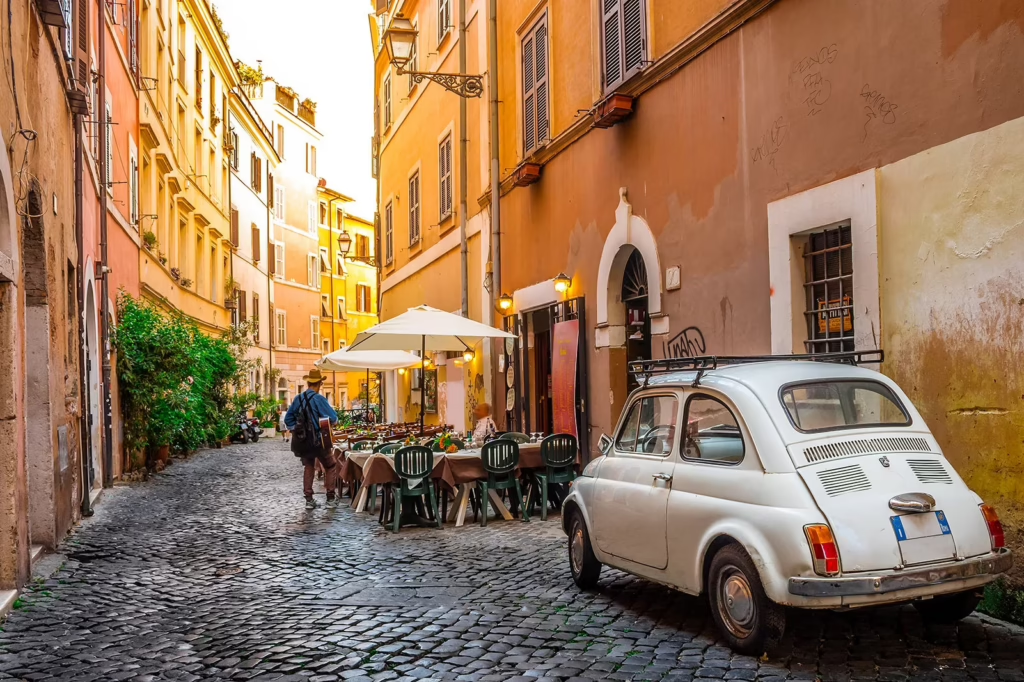
Best for: social teens, foodies, older teens, families who want Rome after dark.
Trastevere is touristy in parts, yes, but it still has that golden Roman evening magic: ivy, lanterns, cobblestones, piazzas, street musicians, and a buzzy social scene. For young people, the best version is not a three-hour formal dinner. It is a roaming food night. Start before sunset, walk the side streets, grab supplì, pizza, gelato, and maybe sit in a piazza where your teen can people-watch.
A structured street-food tour can also work well for families because it gives teens a guide and a mission. Rome food tours often combine Trastevere with Campo de’ Fiori (which has an epic daytime food market) and classic street foods, which is helpful if you want cultural context without dragging everyone through a formal culinary lecture.
What’s hot to order: Supplì, trapizzino, pizza bianca, cacio e pepe, carbonara, gricia, and gelato. For a nonalcoholic aperitivo vibe, order chinotto or a fancy Italian soda. Older teens may love watching the aperitivo ritual, even if they are just there for snacks.
Celebrity angle: Trastevere has long attracted actors, artists, and international visitors. Antica Pesa, one of the neighborhood’s known restaurants, has a high-profile reputation tied to Roman hospitality and its New York connection through Francesco Panella. (La Cucina Italiana)
Cultural dos and don’ts: Trastevere is a real neighborhood, not a theme park, even though it looks picture-perfect.
Best access: Tram 8 is useful from central Rome, though routes can change. Otherwise taxi is often easiest at night. Use an official white taxi or a reputable app.
Sustainable/local note: Choose family-run food spots and avoid disposable plastic when possible. Bring a small reusable water bottle; Rome’s public drinking fountains, called nasoni, are excellent.
6. See Rome’s Street Art and Food Scene in Ostiense
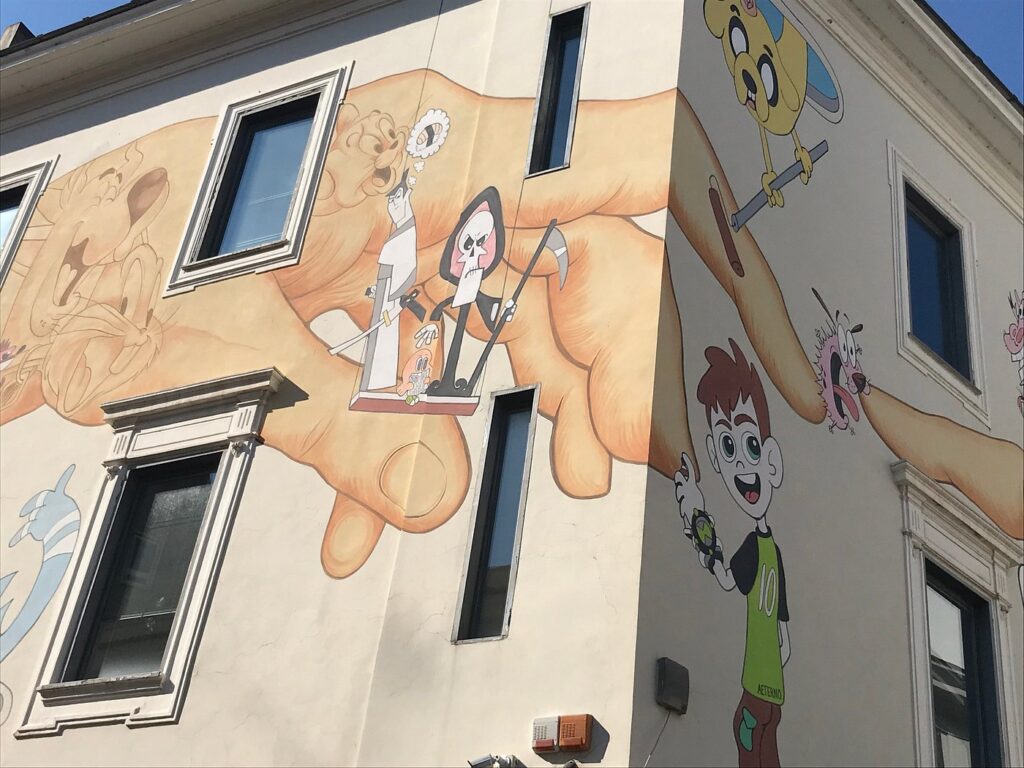
Best for: creative teens, photographers, streetwear kids, teens who think ancient Rome is “too much.”
Ostiense is one of the best areas to show teenagers that Rome is not frozen in marble. This is a post-industrial neighborhood with street art, clubs, food spots, university energy, and a grittier modern edge. It is a smart counterpoint to the Colosseum and Vatican because it says: Rome is still being made.
Pair a street-art walk with food around Mercato Centrale Roma near Termini or with Testaccio/Ostiense lunch. You can also connect it to the Pyramid of Cestius, which teens usually find fascinating because it looks like someone dropped Egypt into Rome. The whole area gives strong “this city is layered” energy.
What’s hot to buy/order: Look for craft coffee, Roman street food, natural wine spots for adults, and casual pasta places. Teens who like photography will want time for murals, textures, train tracks, and industrial architecture.
Celebrity angle: Just tell them that Ostiense is authentic Rome.
Best access: Metro B to Piramide, Garbatella, or Basilica San Paolo, depending on your route. Taxi is reasonable if combining several scattered murals.
7. Visit MAXXI for Modern Art and Zaha Hadid Architecture
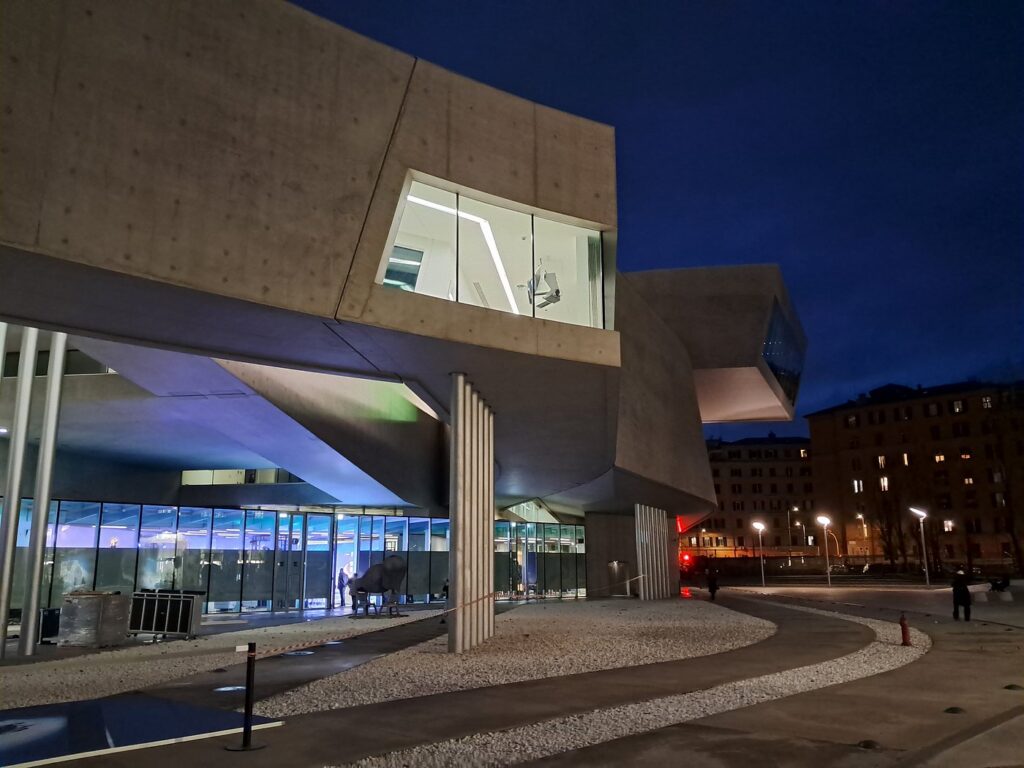
Best for: design teens, architecture kids, fashion kids, artsy teens, families who need a break from Renaissance overload.
MAXXI is Rome’s National Museum of 21st Century Arts, and it is a major vibe shift from ruins and churches. Designed by Zaha Hadid, it has sweeping concrete curves, dramatic staircases, and contemporary exhibitions that feel more connected to the world teens live in now. Official MAXXI information lists the museum at Via Guido Reni 4/A, with regular hours Tuesday to Sunday from 11 a.m. to 7 p.m. and Monday closed. (MAXXI)
This is a good “teen reset” museum because the building itself is part of the experience. Even teens who do not want to read every wall label may enjoy the architecture, installations, photography, or design-forward gift shop.
What’s hot to buy/order: The museum shop is good for design objects, art books, posters, stationery, and small gifts that feel more original than souvenir magnets. Nearby Flaminio also has cafés where you can grab coffee, panini, or pastries.
Celebrity angle: MAXXI’s architect, Zaha Hadid, remains a global design icon, and Rome has recently leaned into her legacy with high-profile design projects like Romeo Roma, described in 2025 coverage as one of her final hotel projects. (New York Post)
Cultural dos and don’ts: Modern art can be confusing, and that is okay. Let teens react honestly, but not obnoxiously. “I don’t get it” is fine. Mocking loudly in a gallery is not.
Best access: Tram/bus from Flaminio or taxi. From central Rome, taxi is often easiest because MAXXI is north of the tight historic core. For a more sustainable route, use the ATAC app to plan tram and bus connections. (Atac)
8. End with Trevi Fountain, Spanish Steps, and a Late-Night Gelato Walk
Best for: movie-loving teens, fashion teens, first-timers, families who want the classic Rome glow-up.
Yes, these spots are crowded. Yes, they are cliché. Still, teenagers deserve at least one full La Dolce Vita night walk. Start around the Spanish Steps, wander toward the Trevi Fountain, then continue to the Pantheon or Piazza Navona depending on energy. This is Rome at its most cinematic: fountains, floodlit stone, street musicians, and everyone pretending they are not secretly delighted.
Make it teen-friendly by going late enough that the heat has dropped, but not so late that everyone is melting down. Give teens a little photo time. Rome is one of the few places where the “basic” photo is basic because it is actually beautiful.
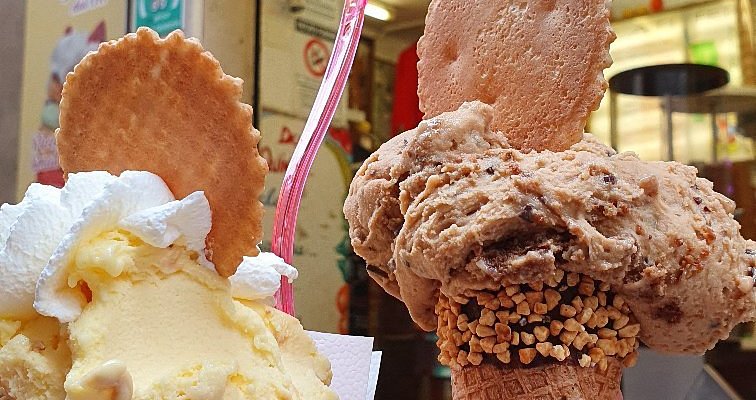
What’s hot to buy/order: Gelato, obviously, but avoid neon-colored flavors. Look for natural colors and covered tubs. Pistachio, stracciatella, hazelnut, dark chocolate, and seasonal fruit are truly Italian. Around the Spanish Steps, teens may also want to window-shop for beauty products, perfume, or fashion, but for actual shopping, prices are often better away from the luxury core.
Celebrity angle: The Spanish Steps area is one of Rome’s classic celebrity hotel zones. Hotel de Russie is officially located between Piazza del Popolo and the Spanish Steps, and celebrity-sighting archives regularly place major stars in central Rome. (Rocco Forte Hotels)
Cultural dos and don’ts: Do not sit on the Spanish Steps if prohibited, do not eat on monuments, and do not enter fountains. At Trevi, toss a coin if you want the ritual, but keep your bag zipped and your phone secure. Crowds here are pickpocket heaven.
Best access: Metro A to Spagna for the Spanish Steps or Barberini for Trevi. Taxi is fine late at night, but the historic center can be slow. Walking is the best experience once you are there.
Final Rome Tips
Rome rewards a slower rhythm. Do one major “serious” site per day, then balance it with food, shopping, outdoor time, or a neighborhood wander. Build in water breaks. During the summer focus your activity in the morning and evening to avoid the midday heat.
Listen to Cerca’s guide to Rome – Food, Art, and Family episodes, and more!